The Elohim are an extremely ancient pantheon of deities, with a mysterious and complex history. Though their exact origin is unknown, the earliest mentions of their name and worship appear around 3,000 B.C.E in Mesopotamian mythology, the precursor to the many religions that followed. They were first mentioned in the ancient Babylonian epic poem Enuma Elish, and were believed to be divine figures controlling the world, with the gods of the other ancient cultures interpreted by early historians as their children or servants.
The Elohim appear many times throughout Old Testament scripture, often used synonymously with the God of the Hebrews. This does not mean that the Elohim are the same as Yahweh, the God of the Israelites, but rather that the Elohim predate the faith and are at times confused with God. It is believed that the Hebrews adopted the Elohim for their own religion, as the Elohim embodied broad aspects of the godhead that fit with the idea of a singular, all-powerful deity.
While the Elohim are most commonly associated with Judaism, they are also found in many other religions, such as Kabbalah, Hermeticism, and Gnosticism. The Elohim were central to the teachings of many mystic movements, used as a tool by mystics to gain insight into the metaphysical. They were seen as transcendent, powerful, and all-encompassing, but their characteristics and purposes varied according to the tradition interpreting them. This was seen to emphasize the incredible power of the Elohim, and their ability to transcend the boundaries of any one religion.
In the modern world, the Elohim are often associated with occult and new age spirituality. They are seen to represent the divine in all its forms, with many linking them to the power of the supernatural and cosmological forces. Despite their ancient origin, the Elohim remain incredibly popular today as a source of spiritual guidance and inspiration.
In summary, the Elohim are an incredibly ancient pantheon of deities, whose origin and meaning continue to be heavily debated by historians and theologians. They are found in multiple ancient faiths, and are the source of mystical and spiritual power in many modern interpretations. Despite their mysterious past, the Elohim remain an important and powerful figures in the world of religious and spiritual studies.
Elohim
Thanks for visiting my blog! Click here to learn more about how you can make your own money like me, with a blog like this!
Saint Francis of Assisi (1182-1226) is one of the most venerated and beloved of all Christian saints. His life and legacy have inspired generations of people from all over the world. A contemporary of Saint Dominic and Saint Thomas Aquinas, Saint Francis was born the son of a wealthy merchant in the Italian city of Assisi. He was a pious child, devoted to prayer and caring for the poor, but he desired a life of worldly pleasure and fortune.
As a young man, he joined the military and fought in a war against Perugia, but a wound and a resulting epiphany permanently changed his life. He left the military and committed his life to poverty and service. He gave away all his possessions, adopted a simple clothing style, and began preaching. He eventually founded the Order of Friars Minor, commonly known as the Franciscans, which dedicated itself to helping the poor and the sick.
In his lifetime, Saint Francis traveled the world, from Italy to Egypt, North Africa, Spain and France. Everywhere he went, he spread his teachings of peace, love and service. He taught his followers to respect nature and animals, including his famous sermon to the birds. He also composed the popular prayer “Prayer of Saint Francis,” which is still recited by Christians today.
Saint Francis’ life was marked by severe trials and suffering, including a cross-shaped wound that he carried from the time he was a soldier in the military. He went to great lengths to help the sick and the poor and devoted his life to following the teachings of Jesus Christ. He demonstrated true devotion to God and a profound devotion to helping others. He earned the admiration and reverence of his followers and is venerated as the patron saint of animals, ecology, merchants, and the poor.
Saint Francis’ legacy continues even today, and his example of devotion, humility and compassion has inspired countless individuals throughout the centuries. He is an excellent example of charity, kindness and selfless service, and his life serves as a reminder of God’s grace and mercy. He is remembered as one of the most inspiring and beloved saints in the history of the Church.
Thanks for visiting my blog! Click here to learn more about how you too can make money with a simple blog like this!
In rural Ireland, Imbolc is considered by many to be the first day of Spring, and coincides with Lá Fhéile Bhride, the Feast day of Saint Brigid.
The Druids regarded ‘Brid’ , as a most powerful and beloved Goddess, and on this day bonfires were lit in her honour.
Saint Brigid, known as Mary of the Gael, was born around 450 in Faughart, County Louth in Ulster. Her father, Dagda, was a Druidic High King of the Tuatha Dé Danann and her mother was a Queen called Brocessa.
One day her father took Brigid to the court of a rival King, and, leaving her outside to wait for him, he asked the King to marry Brigid to one of his sons.
When the King asked to see the girl, they found Brigid giving away her father’s sword to a beggar.
This sword had been presented to Dagda by the King, who said, ‘I cannot accept a girl into our family who holds a sword so cheaply’, and so it was that Brigid avoided being married.
Being very beautiful, Brigid had numerous suitors. Her father, still eager to marry her off, was not impressed by her conversion to Christianity or her vow of perpetual chastity, and remained determined to find her a husband.
So at the age of sixteen, Brigid implored Christ to make her so unattractive that nobody would want her as a wife.
Her prayer was answered; one of her eyes became grotesquely huge, while the other eye shrank – and it is said that upon seeing this, her father finally allowed her to become a nun.
But it is said that during the ceremony, Angels put a veil over her head, and her beauty was instantly restored, only this time even more luminous.
St Brigid received monastic tonsure at the hands of St Mael of Ardagh and was granted by the King of Leinster the possession of a plain called the Curragh, where she built herself a hermitage under a large oak tree, called Kill-dara, or Cell of the Oak.
As the leader of a community which later became Ireland’s most renowned center of learning, Brigid became an important figure in the ancient world, eventually assuming the role of Bishop.
Brigid set up an eternal flame to represent the Holy Spirit’s constant presence. The flame was extinguished several hundred years later during the Reformation, but it burns again today in Kildare.
St Brigid died on 1 February 524. She was buried at Kildare, and her relics were transferred to Downpatrick during the Viking invasions.
She is regarded as patroness of Ireland, second only to the Mother of God, and is venerated in northern Italy, France, and Wales.
Blessed St Bride’s day.
Gabhaim molta Bride. I praise Brigid.
Ionmhain í le hÉireann Beloved in all Ireland
Ionmhain le gach tír í Beloved in all countries
Molaimis go léir í Let us all praise her.
Lóchrann geal na Laighneach The bright torch of Leinster
‘Soilsiú feadh na tire Shining throughout the country
Ceann ar óghaibh Éireann The pride of Irish youth
Ceann na mban ar mine The pride of our gentle women.
Tig an gheimhreadh dian dubh The house of winter is very dark
Gearradh lena ghéire Cutting with its sharpness
Ach ar Lá ‘le Bríde: But on Brigid’s Day
Gar dúinn Earrach Éireann. Spring is near to Ireland..
Saint Brigid
Thanks for visiting my blog! Click here to learn more about how you too can earn money with a blog like this!
Once upon a time, in the ancient kingdom of the Maya, there lived a princess named Zahira. She was known by the people of her kingdom as the Jaguar Queen due to her beauty and grace which seemed to rival that of the majestic jaguar.
It was said that when she was born, a vision of a beautiful jaguar had been seen in the sky. The people viewed this as an omen of good fortune and they believed it was a sign that an exceptionally gifted ruler had come into their midst.
As Zahira grew older, she devoted her life to the preservation of her people and their ancient traditions. She was well versed in the written words of their ancestors, and the art and poetry of the ancient Maya. Zahira was also an extremely skilled hunter. She often led her people on hunts for jaguar and other wild animals, bringing food and resources to the people of her kingdom.
One day, Zahira decided to embark on a quest. She journeyed deep into the jungle, a place that was known to be full of danger and mystery. She eventually arrived at a mysterious temple, one that had been hidden deep within the rainforest. A temple so vast and ancient that it had remained hidden away from the eyes of most.
In the temple, Zahira discovered an object of immense power and beauty. It was a stone tablet, inscribed with strange symbols she had not seen before. As she examined the tablet, she suddenly heard a voice whispering in her ear. It was the voice of a god – a god of the jaguar.
The god told Zahira that she was chosen to protect both her people and the ancient temple from the dangers that lurked in the jungle. The god bestowed great power upon her, enabling her to transform into a jaguar and fight off any evil forces that threatened to bring harm to her kingdom.
From then on, Zahira was known as the Jaguar Queen. She bravely guarded her kingdom, using her newfound strength to protect her people from harm. While she was feared by some, she was beloved by her people, and her legacy lives on in their stories and folklore.
Artist Unknown
Thanks for visiting my blog! Click here to learn more about how to earn money yourself with a blog just like this!
Once upon a time in a magical world, the divine Shiva and his consort Parvati roamed together. This divine couple was in perfect harmony, and all of creation stood witness to their love.
The story of Shiva and Parvati soon spread throughout the universe and it seemed as if the entire world was under their influence. Couples from all corners of the universe wanted to receive blessings from the divine couple.
One such story unfolded in the foothills of the Himalayas, where Shiva and Parvati had taken form as a god and goddess. As the sun set, anticipating their tryst, the two deities danced in the light of the moon.
The stars sparkled and the night seemed alive with energy that was felt everywhere. They were immersed in their love and lost in the sublime melody of creation.
As they danced, Shiva shared his spiritual knowledge with Parvati. Through this sacred knowledge, highly difficult concepts of the Upanishads were clarified by Shiva so that even the most distant star dancing at the edge of the night sky could understand the divine secrets of truth.
With the clarity of knowledge and the language of love, Shiva and Parvati continued to share their love with each other.
With their trances soaring, their amorous tale was revealed like a script from heaven.
The couple embraced each other with passion as the sky lit up in sky blues, pinks and orchids.
The gods of the sky watched in awe and admiration as the divine pair embraced, knowing that this was a union that would forever remain monogamous to one another.
In time, Shiva and Parvati’s love story was remembered and hailed in the annals of the Upanishads and their union was celebrated by the people of the world who forever stand witness to the divine beauty and eternal resonance of the spiritual love story of Shiva and Parvati.
Shiva Shakti
⚕️
Thanks for visiting my blog! Click here if interested in learning how to make money with a blog just like this!
Goddess Shakti meditates on the Divine Light, Basking in its radiating might. She transcends all limitations of the body, Harnessing the power of cosmic energy.
Her soul travels to the source of all knowledge, By her divine will, Her heart is enlarged. Breathing in the frequency of divine surrender, She knows Her path is true and tender.
The Light radiates within and without, Awakening Shakti to the grandest thought. Immersed in cosmic bliss Supreme She reigns, Rising to the top of infinite planes.
Removed from the realm of limited sight, The Goddess opens Her eyes to the All-Encompassing Light. Her soul soaks in the Divine—emptying of all prior strife, And is filled with boundless grace, love & light.
Kundalini Shakti Devi
Thanks for visiting my blog! Click here if interested in learning about how you can make money from a blog just like this!
The Ramayana is an ancient epic poem that tells the story of Rama and Sita, an iconic Hindu deity couple. It is a revered text within Hinduism and esteemed by followers as one of the greatest works of world literature. As part of the larger Hindu tradition, Rama and Sita have come to symbolize many things including ideal righteousness, loyalty, and the divine power of true love.
Sita and Rama have become legendary figures in Hinduism and throughout South Asia due to the prevalence of the Ramayana. They represent the perfect couple and exemplify the characteristics of dharma, devotion, and sacrifice. Devotional texts often portray Sita as the link that binds Rama to his personal dharma in performances of moral and dutiful acts. She is also venerated for her selfless devotion to her husband and her willingness to sacrifice her own safety and well-being in order to bring honor and virtue to their relationship.
Rama is seen as the epitome of morality and devotion. He is a great warrior renowned for his courage on the battlefield and skill in fighting the demoniac forces of evil. As an incarnate of the god Vishnu, Rama is a source of divine strength that inspires his followers to rise to heroic heights and achieve great feats of devotion. In the Ramayana, Rama represents the highest ideals of dharma, and his willingness to practice them even when they cost him great hardship or personal sacrifice is seen as a source of moral inspiration.
The legends of Sita and Rama have been very influential within Hinduism and shaped the way devotional expression to the deity couple has developed over time. Numerous stories and devotional songs have been written about their relationship and have become part of the Ramayana tradition. As a result, the characters of Sita and Rama have been woven into the fabric of many Hindu communities, and their stories are told and re-told throughout Hindu literature and culture.
In conclusion, the legends of Sita and Rama are deeply shared within Hinduism, and their stories represent a powerful example of dharma and loyalty. They have become an integral part of Hindu tradition, and followers often look to their relationship as a source of moral guidance. As two of the most influential deities in Hinduism, Sita and Rama are symbols of true love and devotion.
🕉️
Sita and Rama, two timeless souls, Who walked by faith, made life their goal. Oaths of love and promises they made, Their love so strong, it could never fade.
Rama strong, brave, and true, An epic hero, that much is true. His love for her like none before, Made many a heart even more sore.
Sita, the beautiful and brave, She shed light in life’s darkest cave. A lesson of pure devotion, An archetype for modern woman.
A love story for all to hear, Of devotion and strength, so sincere. Their love through thick and thin, Their legacy, forever within. 💓
Divine Lovers Sita & Rama
Thanks for visiting my blog! Click here to get more info on how to make money yourself with a blog like this!
In the early centuries of Christianity, a diverse array of cults emerged that were considered to be heterodox in the eyes of the early church fathers. One of the most enigmatic of these cults was the Naassenes, a sect of early Gnostic Christians who believed in a complex amalgam of Jewish and Greek traditions. This paper will analyze the rituals, beliefs, and veneration of the snake associated with the Naassenes, and how these elements encapsulate their an unusual Gnostic worldview.
Naassenes veneration of the Serpent Cross
The Naassenes were based in the region of Phrygia, where the cult figure Alexander is thought to have been born and raised. Although little is known of their origins, they exhibit a hybrid of Jewish and Greco-Roman influences. This combination is reflected in their practice of incorporating certain rituals and associated symbols into their beliefs, including the veneration of the snake.
The practice of honoring the snake was incredibly important to the Naassenes, and they saw it as a way to contact the divine. They viewed the snake as a spiritual signpost of sorts, as they held it to be a representation of Adam’s wisdom. They believed that the snake represented the secret knowledge of the imago dei (the divine image) and heavenly perfection, and saw it as a conduit for the flow of the Holy Spirit. As such, veneration of the snake was seen as a way to honor the ultimate source of wisdom and knowledge, which was in turn a way to seek spiritual transformation and growth.
Aside from the veneration of the snake, the Naassenes also incorporated other symbolic practices into their ritual. One example was their ritual of water baptism, which was thought to be a symbol of purification and enlightenment. The Naassenes also included rituals associated with fasting, with their members fasting in preparation for meditation and contemplation, as well as spiritual renewal. Interestingly, the Naassenes honored a rather eclectic pantheon of deities, including figures from both the Old and the New Testaments, as well as several Greco-Roman figures, suggesting the inclusion of these gods into the cult’s beliefs.
The veneration of the snake associated with the Naassenes suggests the presence of a unique worldview within the cult. By venerating the snake, the Naassenes could draw on an animistic conception of the spiritual realm, even while also affirming monotheism. Furthermore, the inclusion of Christian and Greco-Roman elements in their rituals and beliefs shows that they were no strangers to syncretic religious practices. Thus, the veneration of the snake combined with the hybrid nature of their religious views indicates that the Naassenes were Gnostics rather than simply a group of Christians who happened to have unusual beliefs.
The Naassenes sect were known only through the writings of Hippolytus of Rome.
Abraxas Stone or Gem from The Gnostics and their remains by Charles W. King, 1887. The letters are “ΙΑΩ” or “Iao” and “ΣΕΜΕΣ ΕΙΛΑΜ”, “Eternal Sun”.
The Naassenes claimed to have been taught their doctrines by Mariamne, a disciple of James the Just. The retention of the Hebrew form shows that their beliefs may represent the earliest stages of Gnosticism. Hippolytus regards them as among the first to be called simply “Gnostics”, alleging that they alone have sounded the depths of knowledge.
Naassene Sermon : The Naassenes had one or more books out of which Hippolytus of Rome largely quotes in the Philosophumena, which professed to contain heads of discourses communicated by James, the brother of Jesus, to Mariamne. They contained treatises of a mystical, philosophic, devotional, and exegetical character, rather than a cosmological exposition. A very interesting feature of the book seems to have been the specimens it gave of Ophite hymnology.
The writer (or writers) is possibly Greek. He does indeed use the Hebrew words Naas and Caulacau, but these words had already passed into the common Gnostic vocabulary so as to become known to many unacquainted with Hebrew. He shows a great knowledge of the religious mysteries of various nations. For instance, he dilates much on the Phrygian rites, and the whole section seems to be a commentary on a hymn to the Phrygian Attis.
Creation of Adam, Byzantine mosaic in Monreale
First Man
The Naassenes so far agreed with other Ophites that they gave to the first principle the names First Man and Son of Man, calling him in their hymns Adamas.
The First Man (Protanthropos, Adamas); the fundamental being before its differentiation into individuals (cf. Adam Kadmon).
The Son of Man; the same being after it has been individualized into existing things and thus sunk into matter.
Instead, however, of retaining the female principle of the Syrian Ophites, they represented their “Man” as androgynous; and hence one of their hymns runs “From thee, father, through thee, mother, the two immortal names.” They declared that “the beginning of Perfection is the gnosis of Man, but the gnosis of God is perfected Perfection.”
Although the myths of the earlier Ophite system are but lightly touched on, there is some trace of an acquaintance with them, as for example the myth that Adam was brought forth by the Earth spontaneously; he lay without breath, without motion, without stirring, like a statue; being made after the image of the First Man, through the agency of several Archons. In order for them to seize hold of the First Man, there was given unto Adam a soul, that through this soul the image of the First Man above might suffer and be chastened in bondage.
The Naassenes taught that their primary man was, like Geryon, threefold, containing in himself the three natures to noeron, to psychikon, to choikon; and so that in Jesus the three natures were combined, and through him speak to these different classes of men. From the living waters which he supplies each absorbs that for which his nature has attraction. From the same water the olive can draw its oil, and the vine its wine, and in like manner each other plant its special produce: chaff will be attracted by amber, iron only by the magnet, gold only by the prickle of the sea-hawk, so each according to his nature attracts and imbibes a different supply from the same source.
Three classes : Thus there are three classes of men and three corresponding churches :
Material (the Bound)—the heathen chiefly captive under the dominion of matter.
Psychic (the Called)—ordinary Christians.
Spiritual (the Elect)—out of the many called, the few chosen members of the Naassene sect.
Creation
The Naassene work known to Hippolytus would seem to have been of what we may call a devotional character rather than a formal exposition of doctrine, and this perhaps is why it is difficult to draw from the accounts left us a thoroughly consistent scheme. Thus, as we proceed, we are led to think of the first principle of nature, not as a single threefold being, but as three distinct substances; on the one hand the pre-existent, otherwise spoken of as the Good being, on the other hand the “outpoured Chaos,” intermediate, between these one called Autogenes, and also the Logos. Chaos is naturally destitute of forms or qualities; neither does the preexistent being himself possess form, for though the cause of everything that comes into being, it is itself none of them, but only the seed from which they spring.
Adam and Eve with the Serpent, Michelangelo
The Logos is the mediator which draws forms from above and transfers them to the world below. Yet he seems to have a rival in this work; for we have reference made to a fourth being, whence or how brought into existence we are not told, a “fiery God,” Esaldaios, the father of the idikos kosmos. That is to say, it was this fiery being, the same who appeared to Moses in the burning bush, who gave forms to the choical or purely material parts of nature. It is he who supplies the fiery heat of generation by which these forms are still continued. In this work the Logos had no part, for “all things were made through him, and without him was made nothing.” The “nothing” that was made without him is the kosmos idikos.
On the other hand, it is the Logos, who is identified with the serpent, and this again with the principle of Water, who brings down the pneumatic and psychical elements, so that through him man became a living soul. But he has now to do a greater work, namely, to provide for the release of the higher elements now enslaved under the dominion of matter, and for their restoration to the good God.
Generation
The Mysteries of the ancient world, it is taught, pertained to generation. The Lesser Mysteries pertained to the carnal, and the Greater dealt with the spiritual. Within the seed—sperma—is the Mystery of the Logos, as it is the original cause of all things that exist.
For the restoration of the chosen seed an essential condition is the complete abandonment of sexual intercourse between men and women. The captive people must pass out of Egypt; Egypt is the body, the Red Sea the work of generation; to cross the Red Sea and pass into the wilderness is to arrive at a state where that work of generation has been forsaken. Thus they arrive at the Jordan.
The Cross and Sacred Serpent Christ
This is the Logos through whose streams rolling downward forms had descended from above, and generations of mortal men had taken place; but now Jesus, like his Old Testament namesake, rolls the stream upwards, and then takes place a generation not of men, but of gods, for to this name the new-born seed may lay claim (Psalms 82:6). But if they return to Egypt, that is to carnal intercourse, “they shall die like men.” For that which is born from below is fleshly and mortal, that which is born from above is spiritual and immortal. This is the divine bliss—hidden, and yet revealed—of that which was, is, and will be—the kingdom of heaven to be sought for within.
The specimens already given present but a faint idea of the author’s method of scripture exegesis. Hippolytus declares that the verses of Paul in Romans 1:27 contain the key to their whole system, which he alludes to with a great deal of innuendo:
“And likewise also the men, leaving the natural use of the woman, burned in their lust one toward another; men with men working that which is unseemly, and receiving in themselves that recompense of their error which was meet.”
This “unseemly” being their Mystery of divine bliss, he states; “that heavenly, sublime, felicity, that absence of all form which is the real source of every form.” And baptism applied to none save the man who was introduced into this divine bliss, being washed with the Living Water, and “anointed with the Ineffable Chrism from the Horn, like David [was], not from the flask of clay, like Saul, who was fellow citizen with an evil daemon of fleshly desire.”
The Hermetic alchemists asserted that the Great Work was an opus contra naturam; Paul’s use of “against nature” (παρὰ φύσιν, Romans 1:26) may have been given a similar allegorical meaning by the Naassene exegete. It is certainly possible that the Naassenes viewed homosexuality as exemplifying their concept of androgyny. Carl Jung remarked, “such a disposition should not be adjudged negative in all circumstances, in so far as it preserves the archetype of the Original Man, which a one-sided sexual being has, up to a point, lost.” But as to evidence of any “unseemly” acts, Hippolytus writes that in every way, “they are not emasculated, and yet they act as though they were.”
Exegesis
The writer, it will be seen, makes free use of the New Testament. He seems to have used all the four Gospels, but that of which he makes most use is St. John’s. He quotes from Paul’s epistles to the Romans, Corinthians (both letters), Galatians, and Ephesians. There is a copious use also of the Old Testament; and besides we are told there is a use of the Gospel according to the Egyptians, and that of Thomas. But what most characterizes the document under consideration is the abundant use of pagan writings.
For the author’s method of exegesis enables him to find his system in Homer with as much ease as in the Bible. Great part of the extract given by Hippolytus is a commentary on a hymn to the Phrygian Attis, all the epithets applied to whom are shown when etymologically examined, to be aspects of the Logos. One of the first of the titles applied to Attis is papas—here we are taught to recognise him who brought to rest (epause) all the disorderly motion that prevailed before his appearing. To him all things cry paue, paue, ten asymphonian.
Serpent Grail
The serpent
Every temple, naos, shows by its title that it is intended for the honour of the serpent naas as “the Moist Essence,” of the universe, without which “naught at all of existing things, immortal or mortal, animate or inanimate, can hold together.” Furthermore, “all things are subject to Him, and He is Good, and has all things in Him … so that He distributes beauty and bloom to all that exist according to each one’s nature and peculiarity, as though permeating all.”
G.R.S. Mead has suggested that all of this is in reference to the Kundalini:
This is the cosmic Akāsha of the Upaniṣhads, and the Kuṇḍalinī, or serpentine force in man, which when following animal impulse is the force of generation, but when applied to spiritual things makes of a man a god. It is the Waters of Great Jordan flowing downwards (the generation of men) and upwards (the generation of gods); the Akāsha-gangā or Heavenly Ganges of the Purāṇas, the Heavenly Nile of mystic Egypt.
Eden
The Garden of Eden, in the Naassene system, is the brain, and Paradise the human head, with the four rivers having special significance:
Pishon, “that is it which compasseth the whole land of Havilah, where there is gold; And the gold of that land is good: there is bdellium and the onyx stone.”
Eyes (because of its dignity and colors that bear witness to what is said)
Gihon, “the same is it that compasseth the whole land of Ethiopia.”
Hearing (because of its being labyrinthine)
Tigris, “that which flows the opposite way to the Assyrians.”
Breathing (because “the current of it is very rapid; and it ‘flows the opposite way to the Assyrians,’ because after the breath is breathed out, on breathing in again, the breath that is drawn in from without, from the air, comes in more rapidly, and with greater force.”)
Euphrates
Mouth (because through prayer and food, a “man is rejoiced, and nourished and expressed.”)
In conclusion, the Naassenes were an early Christian Gnostic cult whose beliefs and practices encompassed a wide range of Jewish and Greco-Roman elements. Of particular importance to the cult was the veneration of the snake, which was seen as a representation of the connection to the divine and an access point to spiritual renewal and growth. This veneration is a clear sign of their complex and syncretic worldview, and shows that the Naassenes were true Gnostics, not just eccentric Christians.
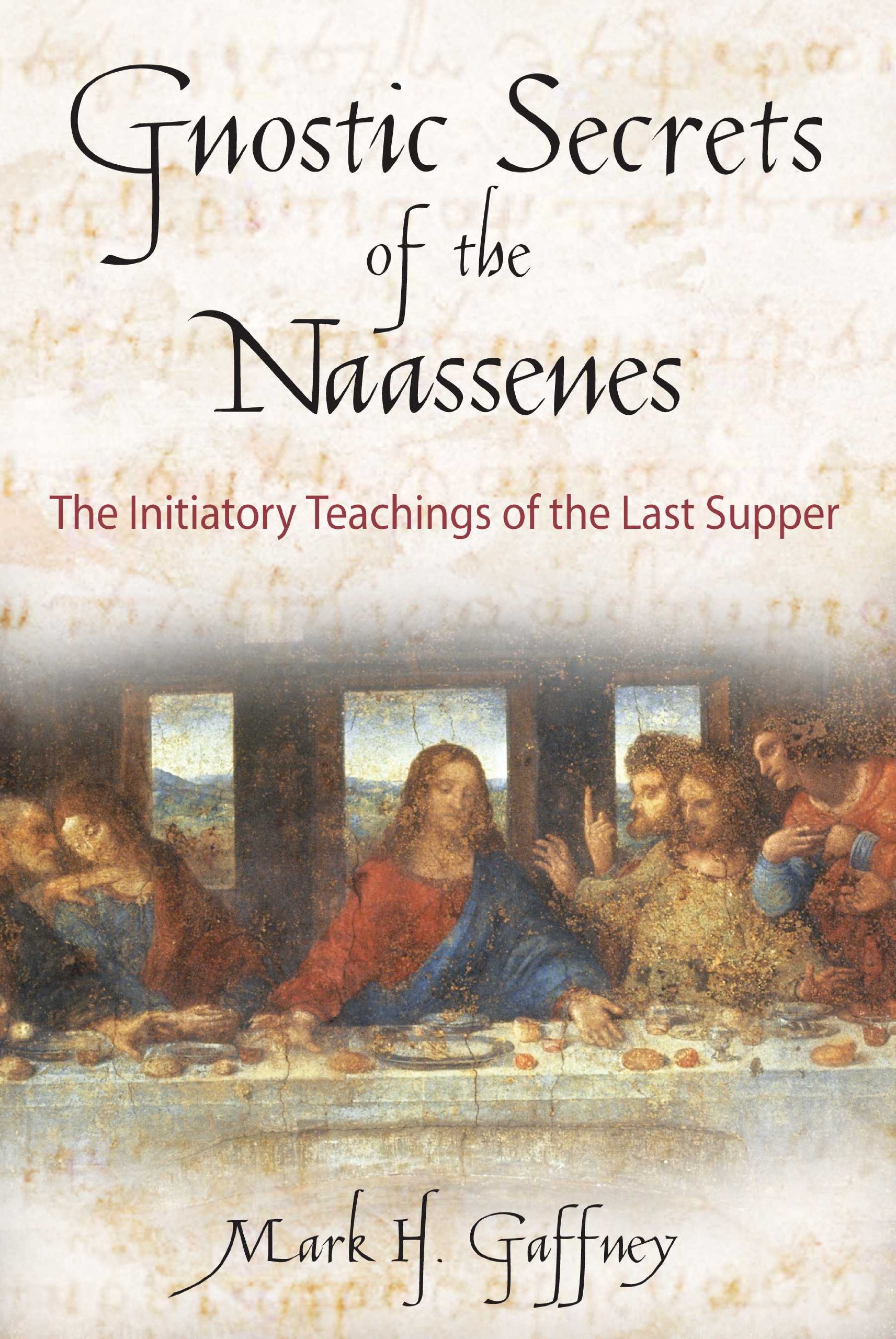
Book by Mark H. Gaffney
Here are some documents and books to look into further in your quest :
A Naassene Fragment (quoted by Hippolytus as a summary of the entire Naassene system)
The Gospel of Philip (evidently distinct from the Gospel of Philip of the Nag Hammadi Library)
The Gospel of Thomas
The Greek Gospel of the Egyptians
Thanks for visiting my blog! Click here to learn more and receive info about how you can make money too with a blog like this!
Once upon a time, a long long way from where we now stand, there lived a powerful and divine being known as Lord Shiva. He was one of the three Supreme Gods of Hinduism and was said to reside atop of Mount Kailash in the Himalayas.
One day, Lord Shiva set out on a journey of self-discovery and exploration. Along the way, he encountered a sacred plant known as cannabis. Feeling the plant’s pure energy, Lord Shiva was inspired and consumed the leaves and flowers of the cannabis plant. The energy of the divine plant was overwhelming, calming and energizing all at once.
Once the effects of the cannabis had taken hold, Lord Shiva experienced incredible visions. He saw both the depths of life and the beauty of it, understanding the intricate balance that exists in the Universe. Upon coming to the realization that each moment of life is a precious gift, he embraced all of creation – from the trees to the stars – as part of himself.
Lord Shiva’s connection to cannabis remained strong, and he is said to have invented the holy bhang, a cannabis infused beverage, to boost himself and his followers’ spiritual awareness and connection to the divine.
And, to this day, Shiva himself is often represented with a cannabis leaf over his third eye, reminding us of the importance of that plant’s power and significance. To this day, many still believe that the true path to inner peace can be found through the use of cannabis and with the blessing of Lord Shiva.
Shiva has been a part of Hindu mythology since ancient times, and he has been greatly revered by millions around the world, in India and beyond. He is the all-powerful Hindu God of destruction and rebirth, often depicted with four arms and a trident in hand, dancing the Tandava. On the other side of the spectrum, Cannabis has been widely used around the world for hundreds of years, both recreationally and medicinally, as an aid in achieving a higher state of consciousness and health. This paper will discuss the relationship between Lord Shiva and Cannabis, looking at their history and uses for religious and medicinal purposes.
History
The relationship between Lord Shiva and Cannabis has been around for centuries. As early as 2000 BC, Cannabis was widely used in India for medicinal reasons and as an aid in achieving altered states of consciousness. Culturally, the use of Cannabis was associated with Shiva, who was often referred to as the Lord of Bhang. Bhang is an Ayurvedic herb mixture including Cannabis as its main ingredient and other herbs such as rose petals and spices. This mixture was then made into a drink and offered to Shiva as a way of showing devotion.
The use of Cannabis in traditional Indian culture is mentioned in various Hindu scriptures such as the Atharvaveda and Sushruta Samhita. It is also mentioned in written records by travelers to India such as the Greek writer Herodotus who noted its medicinal properties. Cannabis was used in India in the form of Bhang as well as charas, which is the resin of the female Cannabis plant smoked in a chillum (ornamental clay pipe).
Symbolism
Cannabis was seen as a symbol of both vitality and destruction in ancient Hindu culture. Shiva’s use of Cannabis is seen as a representation of his ever-changing states from destruction to creation, from death to life. It is thought that the use of Cannabis helped Shiva to both find and maintain balance in his life, and thus provided an example of how Cannabis can be used for personal and spiritual growth.
There is also the idea of Cannabis being used as an offering to Shiva in order to obtain his blessings and bestow prosperity on a person or a kingdom. As well as being consumed as a drink or smoked, Cannabis was also used as a votive offering, where it was offered as an offering of thanks, or burned in the fire as part of a Puja ceremony.
Medicinal Uses
The medicinal uses of Cannabis are well known, and have been around for centuries. Cannabis has been used for a variety of medical conditions, including pain relief, anxiety, and even as an aid for sleep. The active compounds in Cannabis, known as cannabinoids, are known to affect certain receptors in the body, leading to a variety of therapeutic effects. Research has found that the use of Cannabis can be beneficial for a range of medical conditions, and can improve quality of life for those suffering from chronic pain, insomnia, and more.
Lord Shiva and Cannabis have a long history together, and are both actively used in various Hindu rituals and traditions. Shiva is often seen as using Cannabis to both achieve and maintain balance in his life, while Cannabis is increasingly being used in the modern world for its medicinal properties. The relationship between Shiva and Cannabis is one that is complex, but ultimately can be seen as a practical way of using a natural substance to achieve balance and better health.
Thanks for visiting my blog! Click here for info about how to make money with a blog like this!
Narasimha, the fourth avatar of Lord Vishnu, was born from a powerful and tumultuous blaze of fire in a beautiful golden twilight, before making his way to the earthly realms.
He was sent by Krishna to liberate the oppressed and punish the evil king, Hiranyakashipu. The mere sight of Narasimha, who was half lion and half man, filled Hiranyakashipu with terror and dread. Narasimha then proceeded to tear into the king’s chest, bring his years of tyranny and cruelty to an end.
Having accomplished his mission, Narasimha then transformed into a gentle and compassionate being, kindness emanating from his aura. He graced the earth with a renewed sense of hope and fearlessness. With heavenly music filling the air and a sight of mercy, he granted people with his divine blessings and protection.
His legend and deeds soon spread far and wide, and ever since, people have praised and celebrated him for his infinite strength and compassion. His presence is still venerated today, for the invaluable contribution he made to protect the innocent and punish the wicked.
Narasimha continues to serve as an example to all of us, to demonstrate courage and strength in the face of oppression and suffering. Through his remarkable journey, we’ve been reminded that justice always triumphs, no matter how dark and difficult the times be.
Art by Art is Well 🕉️
Life Coach, Entrepreneur, Social Media Expert, Musician, Yoga Teacher, World Traveler