Tell the tale of Mary Magdalene the rightful heir of long and great family Her name has been forgotten and blurred Lies and truths will soon be heard
She carried Jesus’ love and will Anointed with great understanding and skill A secret church that no man can see A passage of faith so powerful and free
She was the treasurer of the loving way A descendent of a king and queen arrayed Subject to persecution and pain Yet still persevered as she sustained
A messenger who brought light to darkness Gnosis, wisdom lead to brightness Truest faith, Union with the Divine Forever and ever will Mary Magdalene shine
Maria Magdalena
Thanks for visiting my blog! To learn more about the Law of Attraction and to start your own journey with a team of like-minded and inspired Entrepreneurs, forging a way to make the world a better place for all, just like you…
Click here & listen to our Daily Mastermind Call (recorded live Mon-Fri) & also I invite you to learn more about our premiere Home Business Academy here. I’m here to help! See You on the Inside!
In yonder tree stands tall with might, A symbol of life, its leaves bright. Its twin pillars represent end and start, Boaz & Jachin, each a life-giving part.
From two distinct sources, a spark comes alive, A paradox formed, of contradictions rife. For from the union of Star Father and Gaia A Christ Child is born, through the Powers of the Fire.
He brings a message of Love and Compassion, Of Harmony and Balance, beyond 3D perception. He carries forth the Tree of Life, an eternal reminder Of Interconnectivity, the Sacred Union of Creator & Nature.
The idea of spiritual attainments and the pursuit of knowledge to gain understanding of the sacred mysteries have been the shared subject of much study and conjecture in the Western world, spanning across different religions and spiritual belief systems. Of the many topics that could be discussed, the shared journey of Pharaoh in Ancient Egypt, the Messiah in Judeo-Christianity, and a Master Mason in Freemasonry contain a set of striking parallels. While each of these paths provides its own unique rituals and obstacles, there are two common unifying elements that run consistently through each of these systems: initiation and divine power.
In Ancient Egypt, Pharaoh was the ultimate figure of spiritual authority, deemed divinely chosen by the gods to act as their conduit. After a period of initiation, which typically included memorization of certain sacred texts and promises of loyalty, Pharaoh would be granted access to a plethora of divine powers. These divine powers would enable the Pharaoh to access knowledge about the universe and the realm of the gods. Similarly, in Christianity, the Messiah is characterized as having undergone an initiation in which he has promised loyalty to God, and upon doing so, is given access to divine powers. These divine powers enable the Messiah to access knowledge of the spiritual realm and ultimately provide salvation to the multitudes.
Finally, in Freemasonry, a journeyman Mason undertakes a series of initiations that enable him to “enter the uncharted mysteries of the fraternity” (Gardner, 2014). Upon successful completion of his initiations, the Master Mason is granted access to divine secrets and esoteric knowledge. In each of the aforementioned traditions, initiation and spiritual authority are unifying elements that are necessary for one to access knowledge of the sacred mysteries and gain an understanding of the divine.
The comparison between Pharaoh in Ancient Egypt, the Messiah in Christianity, and a Master Mason in Freemasonry holds many symbolic links that can be drawn upon and discussed in further detail. These links point to a larger spiritual journey that is intertwined with the practices of each tradition. In particular, the idea of initiation and attaining divine power to access knowledge of the mysteries is a unifying element that is present in each system. While each of these paths is unique, the initiation process and the conferring of divine authority are integral steps that each individual takes in becoming spiritually empowered and enlightened. While it is true that the specifics of each tradition hold many differences, it is undeniable that at their core, these traditions share principles and paths that can be universal for any spiritual seeking.
The Pharaoh of Egypt and Gnostics’ image of Jesus Christ have historically been closely intertwined as a result of their common focus on the pursuit of wisdom. This article provides an examination of the parallels between the Pharaoh of Egypt and becoming a Christ in Gnosticism. Scholarly evidence suggests that there are various connections between the ancient Pharaohs and Jesus Christ in Gnosticism, which can be interpreted as similar to spiritual transformation, initiation, and Gnostic teachings about divine knowledge and enlightenment.
The Pharaoh of Egypt was a powerful ruler and the embodiment of a divine principle. Such a position could only be achieved through initiation, much like the opening of the seven seals that were meant to initiate the Gnostics into the knowledge of god’s mysteries. As such, both the Pharaoh and the Gnostics underwent a transformation, a spiritual ascent to a higher level of understanding and knowledge. According to ancient Egyptian lore, the Pharaoh was believed to be the intermediary between gods and human beings, just as Jesus is in Gnosticism.
In addition, Gnosticism encourages the distinguishing of the secret knowledge held by the divine and the lower, profane knowledge accessible to mere mortals. This distinction is echoed in the ancient Egyptian concept of Ma’at, the divine law, which the Pharaoh was tasked with upholding. The Pharaohs had a special, privileged relationship with the gods that only they could access due to their position—similar to the exalted status of Jesus in Gnosticism.
Finally, the Pharaohs of Egypt were responsible for maintaining a balance between chaos and order. The cosmic duality, or ‘as above, so below’, that is so pervasive in Gnosticism was also deeply important to ancient Egyptian culture. As divine rulers, Pharaohs oversaw the spiritual and physical harmony of their kingdom, much as Jesus provides universal balance through his teachings. In both cases, balance was achieved through a synthesis of the lower and higher realms of knowledge.
The Pharaoh of Egypt and the figure of Jesus Christ in Gnosticism have significant parallels that provide insight into the mystery of the divine. The similarities between these two figures highlight the importance of ascension to a higher level of enlightenment and knowledge and emphasize the divine responsibility that is integral in both societies. This article has demonstrated that the Pharaoh of Egypt and becoming a Christ in Gnosticism have more in common than we might think.
The parallels between the King Making Ritual of becoming a Pharaoh of Egypt and becoming a Master Mason in Freemasonry have become increasingly apparent in recent years as various studies and investigations have been conducted. The groundbreaking book ‘The Hiram Key’ by Christopher Knight and Robert Lomas has added greatly to this knowledge, and has helped to illuminate the many similarities between the two rites. As the authors state, “… the platform of symbolic rituals used by the Egyptian priesthood to initiate a Pharaoh appears to have been adopted and adapted by the Freemasons when creating the Rite of the Master Mason.”
The authors provide an in-depth look at what the then-current interpretation of the Craft’s ‘Third Degree’ included, and also divulge that a number of the features of this degree bear a striking resemblance to certain aspects of the Egyptian Pharaoh’s coronation ceremony. For example, in both ceremonies the candidate is cloaked in mystery and is initially referred to as a ‘lost-found’ person. In Ancient Egypt, during the coronation of a Pharaoh, the candidate would be initially referred to as a ‘lost-found’ until the ceremony was completed. The same term was employed in Liberty Lodge, a Masonic Lodge in London, England that was active during the late eighteenth century – where the candidate was also referred to as ‘lost-found’.
In addition to this, the authors point out that in both ceremonies the candidate is required to visit a ‘tomb of the Grand Master’. Again in the Egyptian coronation ceremony this was represented by the recitation of the akh texts or ‘Opening of the Mouth’ ritual which emphasised the Pharaoh’s union with Osiris in the afterlife. At Liberty Lodge, the candidate was also required to visit a ‘tomb of the Grand Master’, symbolically representing the union with Hiram Abiff – the symbolic father architect of the First Temple of Jerusalem, and the original Grand Master of Freemasonry.
While it can’t be entirely ruled out that the similarities between the two ceremonies were merely coincidental, it’s fair to say that there are strong indications that the Egyptian King Making Ritual provided the Freemasons with a platform on which to base their own rites. The Hiram Key goes on to explore the roots of Freemasonry’s own ritualistic ceremonies much further and it clearly illustrates how the ancient Pharaohs coronation played an important role in the development of Freemasonry as we know it today.
In Isaiah 19:20, the Jewish prophet Isaiah compares the Pharaoh of Egypt to the Messiah, saying, “It will be a sign and a witness to the Lord Almighty in the land of Egypt. When they cry out to the Lord because of their oppressors, He will send them a Savior and Defender, and he will rescue them.”
According to the Dead Sea Scrolls, a collection of ancient Jewish texts, many of the rabbis and sages of the Second Temple period who were writing and interpreting the scriptures viewed the Pharaoh of Egypt as a type of the messiah.
In the Talmud, the ancient Jewish oral tradition, there is an interpretation of Isaiah’s prophecy about Egypt in which the Pharaoh is seen as a type of the Messiah.
The Jewish thinker Maimonides wrote that the Pharaoh of Egypt was a paradigm of the anticipated messiah.
“And I have heard it said in a certain Memphite tradition that the Shepherd Kings had Pharaohs of their own.” – Josephus, Antiquities of The Jews
The theory that the messiah is a parallel to the pharaoh has been a subject of intense academic debate. This paper will discuss how the messiah and pharaoh both play a role in the ancient concept of kingship and how the portrayal of the messiah in the Bible reflects the unique responsibilities of the Egyptian pharaoh in his culture.
In the ancient Near East, pharaohs were believed to be representative of, and even to serve, a higher power. As the absolute ruler of Egypt, the pharaoh was considered to be a living god on earth. The pharaoh was viewed as a divinely chosen leader who was responsible for the well-being and prosperity of all of Egypt. He was expected to act in the best interests of his people, protect them from attack, and ensure justice and good order within the realm.
The Hebrew Bible also includes a figure who was called the messiah or “anointed one” who was expected to act as a ruler and savior. The messiah was seen as a spiritual leader who would redeem the Jewish people from their sins and lead them to a brighter future. Like the pharaoh, the messiah represented a higher power, and his role was seen as essential for restoring justice and peace among the people.
The similarities between the roles of the pharaoh and the messiah extend beyond the concept of kingship. Both figures were subject to periods of suffering and sacrifice. In Egyptian mythology, the pharaoh had to overcome many trials, including death and resurrection, before he could assume the throne. In the Bible, the messiah’s sufferings serve as a kind of atonement for the sins of the people and a way to bring about redemption.
Furthermore, the pharaoh and the messiah had significant cosmic powers. In Egyptian mythology, the pharaoh was seen as the bridge between the gods and mortals; he alone could access the mysteries of the gods, and his will and authority were believed to represent the gods’ will. In the Bible, the messiah is believed to possess spiritual authority that is higher than any earthly authority. His power is seen in the way he can perform miracles, as well as in his ability to interpret the divine will.
The comparison between the pharaohs and the messiah is a useful one when exploring the concept of kingship and the responsibilities of these powerful figures in the ancient Near East. Both the pharaoh and the messiah have a divine mission to carry out and are held to a high ethical and spiritual standard. They are charged with protecting their people and ensuring their well-being. The similarities between the two figures demonstrate how sacred power was seen in the ancient world as well as how much influence kingship could have in a society.
In conclusion, the portrayal of the messiah in the Bible reveals many parallels to the concept of the pharaoh in ancient Egypt. The messiah, like the pharaoh, is a divinely chosen leader who is responsible for the well-being of his people and is subject to both suffering and sacrifice. The similarities between the pharaoh and the messiah suggest that the two figures shared many of the same responsibilities, powers, and expectations of kingship.
Reference : Gardner, D. (2014). Freemasonry: A journey through ritual and symbol. Richmond, Surrey: Thames and Hudson.
Knight, C. and Lomas, R. (1996). The Hiram Key: Pharaohs, Freemasons and the Secret Scrolls of Jesus.
Thanks for visiting my blog! To learn more about the Law of Attraction and to start your own journey with a team of like-minded and inspired Entrepreneurs, forging a way to make the world a better place for all, just like you…
Click here & listen to our Daily Mastermind Call (recorded live Mon-Fri) & also I invite you to learn more about our premiere Home Business Academy here. I’m here to help! See You on the Inside!
Prithvi Mudra, translated as “earth gesture,” is a hand mudra, or energy seal, that is commonly used in yoga, meditation, and other spiritual traditions for calming the mind and extending grounding energy. Prithvi Mudra is believed to represent the element earth, and its practice is thought to bring balance and stability to both physical and emotional health.
The mudra is performed by pressing the tips of the ring finger and thumb together while keeping the other three fingers extended. This seal is gentle and peaceful, and it is believed to calm the mind and connect one to the earth, thereby inducing a sense of calmness and stability.
In addition to its calming effects, Prithvi Mudra is believed to have a number of health benefits. It is thought to improve digestion, strengthen bones and joints, nourish the skin, and regulate metabolism. Practicing this mudra is also said to reduce symptoms of stress, fatigue, and insomnia.
Practicing Prithvi Mudra is also thought to improve concentration, intuition, and mental clarity. It is believed to increase focus and aid in both physical and spiritual growth. Additionally, it is used to help cultivate gratitude, generosity, and peacefulness.
In terms of meditation, Prithvi Mudra acts as a grounding tool that helps the practitioner remain grounded and present. It can be practiced anytime, such as before or during seated meditation or pranayama breathing exercises. It can also greatly help the mind remain relaxed and focused during periods of stress and anxiety.
Overall, Prithvi Mudra is a powerful gesture for physical and mental wellbeing that can help to promote a sense of calm, connection, and balance. It is an easy hand mudra to incorporate in everyday life and can provide an array of physical and mental health benefits.
Prithvi Mudra, or Earth Mudra, is an ancient yogic gesture originating in India however is used in various religions around the world today. Although it is predominantly used in Hindu and Buddhist belief systems, Prithvi Mudra also appears in Christian iconography as an embodiment of Jesus Christ.
Prithvi Mudra is a hand position in the practice of yoga, used to honor and connect with the elemental energy of the earth. The mudra itself is made by extending the thumb finger, while folding the other three fingers against the palm. It is believed that Prithvi Mudra creates a sense of groundedness in one’s physical and spiritual foundations.
This spiritual grounding of the earthly world and humanity of Jesus may be why several Christian iconographers have included Prithvi Mudra in their depiction of Jesus in his human form. Some examples of this can be found in the art of El Greco, Michelangelo and other renowned masters. As Christianity emphasizes the spiritual importance of rootedness in the physical body, Prithvi Mudra helps to convey Jesus’ connection to humanity and his ability to understand and sympathize with the everyday struggles of life.
In the Catholic & Eastern Church, Jesus’ presence and embodiment of the earthly world is most notably conveyed in the iconic Eucharistic ceremony. During the ceremony, Jesus breaks bread and says, “This is my body, given for you; do this in remembrance of me.” This gesture of breaking bread, which is connected to Prithvi Mudra in Yoga, brings Jesus’ physical manifestation of the earthly self closer to worshipers.
Apart from his role as an embodiment of groundedness, the use of Prithvi Mudra in Christian art can also be seen as a sign of unity and mutual respect between different religious traditions. Jesus’ inviting gesture combines the power and potential of both Christianity and Yoga and communicates a message of harmony and acceptance between diverse spiritual creeds. Thus, Prithvi Mudra’s utilization in Christian iconography serves as a powerful reminder of how all beings share in the same fundamental needs and goals and how religious and spiritual practices should be used to unite, rather than divide, humanity.
Prithvi Mudra has been found at times a prominent feature in Christian art, as it encapsulates Jesus’ presence on Earth as well as conveys a unified message of acceptance among different religious traditions. By combining the spiritual, physical and symbolic aspects of the mudra, Christian iconographers help to bring Jesus’ relationship to the earthly world to life for people of all faiths and beliefs.
Thanks for visiting my blog! To learn more about the Law of Attraction and to start your own journey with a team of like-minded and inspired Entrepreneurs, forging a way to make the world a better place for all, just like you…
Click here & listen to our Daily Mastermind Call (recorded live Mon-Fri) & also I invite you to learn more about our premiere Home Business Academy here. I’m here to help! See You on the Inside!
Q. What connects all the elements in this title? A. Joseph and Asenath.
Asenath אסנת was the daughter of Potiphar, the high priest of On (Heliopolis), who became the wife of the Old Testament Joseph. We don’t have much information about Asenath from the Torah, but we do get a mythical history in ‘Joseph and Asenath’, a very early apocryphal story from about the 2nd century.
In his ‘The Lost Gospel’, Simcha Jacobovici makes the case that ‘Joseph and Asenath’ is actually a retelling of the Gospel story of Jesus and Mary Magdalene. Which is why the Torah Joseph is being called here a Son of God, and why the Torah Asenath is living in a tower (a Magdal). Just like Rapunzel, Asenath is being symbolically portrayed as being Mary Magdalene, the Princess of the Tower.
Thus it is likely that ‘Joseph and Asenath’ is pesher – a story composed from historical events, that actually reflects and represents contemporary events. Not only does pesher assist in prophesy via precedent, it also hides the true meaning of the contemporary story, which can then safely encode heretical elements.
In addition to this, Joseph is quite obviously being portrayed as Helios, the Sun-god. Which is why we might speculate that ‘Joseph and Asenath’ is more likely a Nazarene text, than a Christian text.
Joseph is described as: … The Saviour … The Son of God … Riding a chariot, with four white horses … Wearing a purple cloak … And a crown with 12 rays, like the rays of the Sun.
This is an overt description of Helios wearing his celestial crown and cloak, riding in his celestial chariot across the heavens pulled by four white horses. ‘Joseph and Asenath’ is not simply a pesher story about Jesus, it is a pesher story about the Solar System.
Asenath is described as: … Living in a Tower (a Magdal) … Having seven attendants, looking like stars
Joseph and Asenath meet, but are not entirely suited to each other (Jewish and Pagan). Then Joseph, as prime minister of all Egypt, has urgent business and goes away for seven days.
While Joseph is away, Asenath throws off her bright clothing and jewellery, and clothes herself instead with black robes covered in ashes. Then she ties her waist with sackcloth, and fasts for all seven days. The ashes are a sign of death, so it is almost as if Asenath is dead.
But then Joseph returns, firstly in spirit form, and then in human form. So Asenath loosens her waist sackcloth, takes off her black garments, shakes off the ashes of death, washes her face with water, and reclothes herself in the bright and splendid clothes of marriage. For she is to marry Joseph.
Quite clearly, this is the origin of the Snow White story, where the bright and white Snow White also has seven dwarf attendants. And like Asenath she too has a corset around her waist to make her thinner, until she ‘dies’. And she too is kissed by a handsome prince, who brings her back to life and marries her.
But as was explained previously, the Snow White fairytale was based upon the orbit of the Moon. Just like Snow White and Asenath, the Moon is brightly jewelled in the night sky, and followed by seven star-like planetary attendants. The Moon is bright and joyful until a sackcloth or corset is wrapped around her, making her appear thinner and thinner in the night sky until she dies. This is the blackness of the New Moon – the death Snow White and the death of Asenath.
Only now can the dead New Moon Selene meet the handsome Helios – an orbital arrangement that can only happen at the New Moon, when Selene is dark and dead. This is Joseph-Helios meeting Asenath-Selene or the Princely-Helios meeting Snow White Selene. The celestial prince and princess then kiss, at the beginning of a Solar eclipse. And as the eclipse proceeds Helios-Joseph-Prince and Selene-Asenath-Snow-White can be seen in flagrante delicto in their celestial bridal chamber in the heavens above, locked in their orbital embrace.
So the fairytale of Snow White is as old as the Moon, and as old as the Gospels. Of course this does not imply that Joseph and Asenath or Jesus and Mary Magdalene were mythical characters. Royalty were expected to mimic the celestial gods in the heavens above, so the celestial syzygy and eclipse had to take place in the royal bridal chamber, as well as in the heavens above.
As Above, So Below. A royal-celestial syzygy. A cosmic consummation.
Images: a. Helios-Sun rides his chariot across the heavens. b. Helios with his Sun-ray crown and purple cloak, on a Nazarene Jewish zodiac. c. Helios-Joseph-Prince kisses Selene-Asenath-Snow White, to bring the dead New Moon back to life. d. Helios-Joseph-Prince and Selene-Asenath-Snow White, with the tower of Repunzel-Mary-Magdalene in the background.
Reposted from Ralph Ellis
Helios-Sun rides his chariot across the heavens.Helios with his Sun-ray crown and purple cloak, on a Nazarene Jewish Zodiac.Helios-Joseph-Prince kisses Selene-Asenath-Snow White, to bring the dead New Moon back to life.Helios-Joseph-Prince and Selene-Asenath-Snow White, with the tower of Repunzel-Mary-Magdalene in the background.
Prana Mudra is a type of hand gesture used in yoga and meditation. It is used to gather and focus the universal life force, or prana, into the body. Prana is believed to be the life force that animates everything in the universe. Prana Mudra is believed to balance the chakras and enhance overall wellbeing, while also promoting physical and mental health.
History :
Prana Mudra is said to originate from India and is an ancient practice, appearing in texts dating back to the Vedic period (1500 – 500 BC). According to traditional Hindu, Buddhist and yogic texts, Prana Mudra practices were used as an effective way to connect with the life force and bring balance to the body and mind. Prana Mudra is said to have been rediscovered by modern-day yogis and meditation practitioners to bring about healing, creativity, and clarity.
Benefits :
The practice of Prana Mudra is believed to have many benefits for both physical and mental health. It is said to increase energy and vitality, reduce tension and stress, balance the chakras and enhance self-awareness. It is also thought to improve concentration and focus, boost creativity and promote mental health.
How to Perform Prana Mudra :
Prana Mudra is a simple and easy to practice hand gesture. To do Prana Mudra, sit in a comfortable position and place the palms of your hands together. Touch the tips of your ring and pinky finger to your thumb. The index and middle finger should be pointed straight. Keep your hands in this position for several minutes, or as long as it is comfortable. While performing Prana Mudra, focus on your breath and allow the energy to flow freely throughout your body.
Prana Mudra is a simple yet powerful technique that can be used to enhance physical and mental wellbeing. Practicing Prana Mudra is said to increase energy and vitality, reduce stress, balance the chakras and promote mental health. It is an easy to practice and accessible hand gesture that can be done while sitting in a comfortable position and with minimal equipment.
Jesus was often depicted in ancient art doing Prana Mudra
Thanks for visiting my blog! Click here to learn more about how you can make money with a blog just like this!
The Elohim are an extremely ancient pantheon of deities, with a mysterious and complex history. Though their exact origin is unknown, the earliest mentions of their name and worship appear around 3,000 B.C.E in Mesopotamian mythology, the precursor to the many religions that followed. They were first mentioned in the ancient Babylonian epic poem Enuma Elish, and were believed to be divine figures controlling the world, with the gods of the other ancient cultures interpreted by early historians as their children or servants.
The Elohim appear many times throughout Old Testament scripture, often used synonymously with the God of the Hebrews. This does not mean that the Elohim are the same as Yahweh, the God of the Israelites, but rather that the Elohim predate the faith and are at times confused with God. It is believed that the Hebrews adopted the Elohim for their own religion, as the Elohim embodied broad aspects of the godhead that fit with the idea of a singular, all-powerful deity.
While the Elohim are most commonly associated with Judaism, they are also found in many other religions, such as Kabbalah, Hermeticism, and Gnosticism. The Elohim were central to the teachings of many mystic movements, used as a tool by mystics to gain insight into the metaphysical. They were seen as transcendent, powerful, and all-encompassing, but their characteristics and purposes varied according to the tradition interpreting them. This was seen to emphasize the incredible power of the Elohim, and their ability to transcend the boundaries of any one religion.
In the modern world, the Elohim are often associated with occult and new age spirituality. They are seen to represent the divine in all its forms, with many linking them to the power of the supernatural and cosmological forces. Despite their ancient origin, the Elohim remain incredibly popular today as a source of spiritual guidance and inspiration.
In summary, the Elohim are an incredibly ancient pantheon of deities, whose origin and meaning continue to be heavily debated by historians and theologians. They are found in multiple ancient faiths, and are the source of mystical and spiritual power in many modern interpretations. Despite their mysterious past, the Elohim remain an important and powerful figures in the world of religious and spiritual studies.
Elohim
Thanks for visiting my blog! Click here to learn more about how you can make your own money like me, with a blog like this!
Saint Francis of Assisi (1182-1226) is one of the most venerated and beloved of all Christian saints. His life and legacy have inspired generations of people from all over the world. A contemporary of Saint Dominic and Saint Thomas Aquinas, Saint Francis was born the son of a wealthy merchant in the Italian city of Assisi. He was a pious child, devoted to prayer and caring for the poor, but he desired a life of worldly pleasure and fortune.
As a young man, he joined the military and fought in a war against Perugia, but a wound and a resulting epiphany permanently changed his life. He left the military and committed his life to poverty and service. He gave away all his possessions, adopted a simple clothing style, and began preaching. He eventually founded the Order of Friars Minor, commonly known as the Franciscans, which dedicated itself to helping the poor and the sick.
In his lifetime, Saint Francis traveled the world, from Italy to Egypt, North Africa, Spain and France. Everywhere he went, he spread his teachings of peace, love and service. He taught his followers to respect nature and animals, including his famous sermon to the birds. He also composed the popular prayer “Prayer of Saint Francis,” which is still recited by Christians today.
Saint Francis’ life was marked by severe trials and suffering, including a cross-shaped wound that he carried from the time he was a soldier in the military. He went to great lengths to help the sick and the poor and devoted his life to following the teachings of Jesus Christ. He demonstrated true devotion to God and a profound devotion to helping others. He earned the admiration and reverence of his followers and is venerated as the patron saint of animals, ecology, merchants, and the poor.
Saint Francis’ legacy continues even today, and his example of devotion, humility and compassion has inspired countless individuals throughout the centuries. He is an excellent example of charity, kindness and selfless service, and his life serves as a reminder of God’s grace and mercy. He is remembered as one of the most inspiring and beloved saints in the history of the Church.
Thanks for visiting my blog! Click here to learn more about how you too can make money with a simple blog like this!
In rural Ireland, Imbolc is considered by many to be the first day of Spring, and coincides with Lá Fhéile Bhride, the Feast day of Saint Brigid.
The Druids regarded ‘Brid’ , as a most powerful and beloved Goddess, and on this day bonfires were lit in her honour.
Saint Brigid, known as Mary of the Gael, was born around 450 in Faughart, County Louth in Ulster. Her father, Dagda, was a Druidic High King of the Tuatha Dé Danann and her mother was a Queen called Brocessa.
One day her father took Brigid to the court of a rival King, and, leaving her outside to wait for him, he asked the King to marry Brigid to one of his sons.
When the King asked to see the girl, they found Brigid giving away her father’s sword to a beggar.
This sword had been presented to Dagda by the King, who said, ‘I cannot accept a girl into our family who holds a sword so cheaply’, and so it was that Brigid avoided being married.
Being very beautiful, Brigid had numerous suitors. Her father, still eager to marry her off, was not impressed by her conversion to Christianity or her vow of perpetual chastity, and remained determined to find her a husband.
So at the age of sixteen, Brigid implored Christ to make her so unattractive that nobody would want her as a wife.
Her prayer was answered; one of her eyes became grotesquely huge, while the other eye shrank – and it is said that upon seeing this, her father finally allowed her to become a nun.
But it is said that during the ceremony, Angels put a veil over her head, and her beauty was instantly restored, only this time even more luminous.
St Brigid received monastic tonsure at the hands of St Mael of Ardagh and was granted by the King of Leinster the possession of a plain called the Curragh, where she built herself a hermitage under a large oak tree, called Kill-dara, or Cell of the Oak.
As the leader of a community which later became Ireland’s most renowned center of learning, Brigid became an important figure in the ancient world, eventually assuming the role of Bishop.
Brigid set up an eternal flame to represent the Holy Spirit’s constant presence. The flame was extinguished several hundred years later during the Reformation, but it burns again today in Kildare.
St Brigid died on 1 February 524. She was buried at Kildare, and her relics were transferred to Downpatrick during the Viking invasions.
She is regarded as patroness of Ireland, second only to the Mother of God, and is venerated in northern Italy, France, and Wales.
Blessed St Bride’s day.
Gabhaim molta Bride. I praise Brigid.
Ionmhain í le hÉireann Beloved in all Ireland
Ionmhain le gach tír í Beloved in all countries
Molaimis go léir í Let us all praise her.
Lóchrann geal na Laighneach The bright torch of Leinster
‘Soilsiú feadh na tire Shining throughout the country
Ceann ar óghaibh Éireann The pride of Irish youth
Ceann na mban ar mine The pride of our gentle women.
Tig an gheimhreadh dian dubh The house of winter is very dark
Gearradh lena ghéire Cutting with its sharpness
Ach ar Lá ‘le Bríde: But on Brigid’s Day
Gar dúinn Earrach Éireann. Spring is near to Ireland..
Saint Brigid
Thanks for visiting my blog! Click here to learn more about how you too can earn money with a blog like this!
In the early centuries of Christianity, a diverse array of cults emerged that were considered to be heterodox in the eyes of the early church fathers. One of the most enigmatic of these cults was the Naassenes, a sect of early Gnostic Christians who believed in a complex amalgam of Jewish and Greek traditions. This paper will analyze the rituals, beliefs, and veneration of the snake associated with the Naassenes, and how these elements encapsulate their an unusual Gnostic worldview.
Naassenes veneration of the Serpent Cross
The Naassenes were based in the region of Phrygia, where the cult figure Alexander is thought to have been born and raised. Although little is known of their origins, they exhibit a hybrid of Jewish and Greco-Roman influences. This combination is reflected in their practice of incorporating certain rituals and associated symbols into their beliefs, including the veneration of the snake.
The practice of honoring the snake was incredibly important to the Naassenes, and they saw it as a way to contact the divine. They viewed the snake as a spiritual signpost of sorts, as they held it to be a representation of Adam’s wisdom. They believed that the snake represented the secret knowledge of the imago dei (the divine image) and heavenly perfection, and saw it as a conduit for the flow of the Holy Spirit. As such, veneration of the snake was seen as a way to honor the ultimate source of wisdom and knowledge, which was in turn a way to seek spiritual transformation and growth.
Aside from the veneration of the snake, the Naassenes also incorporated other symbolic practices into their ritual. One example was their ritual of water baptism, which was thought to be a symbol of purification and enlightenment. The Naassenes also included rituals associated with fasting, with their members fasting in preparation for meditation and contemplation, as well as spiritual renewal. Interestingly, the Naassenes honored a rather eclectic pantheon of deities, including figures from both the Old and the New Testaments, as well as several Greco-Roman figures, suggesting the inclusion of these gods into the cult’s beliefs.
The veneration of the snake associated with the Naassenes suggests the presence of a unique worldview within the cult. By venerating the snake, the Naassenes could draw on an animistic conception of the spiritual realm, even while also affirming monotheism. Furthermore, the inclusion of Christian and Greco-Roman elements in their rituals and beliefs shows that they were no strangers to syncretic religious practices. Thus, the veneration of the snake combined with the hybrid nature of their religious views indicates that the Naassenes were Gnostics rather than simply a group of Christians who happened to have unusual beliefs.
The Naassenes sect were known only through the writings of Hippolytus of Rome.
Abraxas Stone or Gem from The Gnostics and their remains by Charles W. King, 1887. The letters are “ΙΑΩ” or “Iao” and “ΣΕΜΕΣ ΕΙΛΑΜ”, “Eternal Sun”.
The Naassenes claimed to have been taught their doctrines by Mariamne, a disciple of James the Just. The retention of the Hebrew form shows that their beliefs may represent the earliest stages of Gnosticism. Hippolytus regards them as among the first to be called simply “Gnostics”, alleging that they alone have sounded the depths of knowledge.
Naassene Sermon : The Naassenes had one or more books out of which Hippolytus of Rome largely quotes in the Philosophumena, which professed to contain heads of discourses communicated by James, the brother of Jesus, to Mariamne. They contained treatises of a mystical, philosophic, devotional, and exegetical character, rather than a cosmological exposition. A very interesting feature of the book seems to have been the specimens it gave of Ophite hymnology.
The writer (or writers) is possibly Greek. He does indeed use the Hebrew words Naas and Caulacau, but these words had already passed into the common Gnostic vocabulary so as to become known to many unacquainted with Hebrew. He shows a great knowledge of the religious mysteries of various nations. For instance, he dilates much on the Phrygian rites, and the whole section seems to be a commentary on a hymn to the Phrygian Attis.
Creation of Adam, Byzantine mosaic in Monreale
First Man
The Naassenes so far agreed with other Ophites that they gave to the first principle the names First Man and Son of Man, calling him in their hymns Adamas.
The First Man (Protanthropos, Adamas); the fundamental being before its differentiation into individuals (cf. Adam Kadmon).
The Son of Man; the same being after it has been individualized into existing things and thus sunk into matter.
Instead, however, of retaining the female principle of the Syrian Ophites, they represented their “Man” as androgynous; and hence one of their hymns runs “From thee, father, through thee, mother, the two immortal names.” They declared that “the beginning of Perfection is the gnosis of Man, but the gnosis of God is perfected Perfection.”
Although the myths of the earlier Ophite system are but lightly touched on, there is some trace of an acquaintance with them, as for example the myth that Adam was brought forth by the Earth spontaneously; he lay without breath, without motion, without stirring, like a statue; being made after the image of the First Man, through the agency of several Archons. In order for them to seize hold of the First Man, there was given unto Adam a soul, that through this soul the image of the First Man above might suffer and be chastened in bondage.
The Naassenes taught that their primary man was, like Geryon, threefold, containing in himself the three natures to noeron, to psychikon, to choikon; and so that in Jesus the three natures were combined, and through him speak to these different classes of men. From the living waters which he supplies each absorbs that for which his nature has attraction. From the same water the olive can draw its oil, and the vine its wine, and in like manner each other plant its special produce: chaff will be attracted by amber, iron only by the magnet, gold only by the prickle of the sea-hawk, so each according to his nature attracts and imbibes a different supply from the same source.
Three classes : Thus there are three classes of men and three corresponding churches :
Material (the Bound)—the heathen chiefly captive under the dominion of matter.
Psychic (the Called)—ordinary Christians.
Spiritual (the Elect)—out of the many called, the few chosen members of the Naassene sect.
Creation
The Naassene work known to Hippolytus would seem to have been of what we may call a devotional character rather than a formal exposition of doctrine, and this perhaps is why it is difficult to draw from the accounts left us a thoroughly consistent scheme. Thus, as we proceed, we are led to think of the first principle of nature, not as a single threefold being, but as three distinct substances; on the one hand the pre-existent, otherwise spoken of as the Good being, on the other hand the “outpoured Chaos,” intermediate, between these one called Autogenes, and also the Logos. Chaos is naturally destitute of forms or qualities; neither does the preexistent being himself possess form, for though the cause of everything that comes into being, it is itself none of them, but only the seed from which they spring.
Adam and Eve with the Serpent, Michelangelo
The Logos is the mediator which draws forms from above and transfers them to the world below. Yet he seems to have a rival in this work; for we have reference made to a fourth being, whence or how brought into existence we are not told, a “fiery God,” Esaldaios, the father of the idikos kosmos. That is to say, it was this fiery being, the same who appeared to Moses in the burning bush, who gave forms to the choical or purely material parts of nature. It is he who supplies the fiery heat of generation by which these forms are still continued. In this work the Logos had no part, for “all things were made through him, and without him was made nothing.” The “nothing” that was made without him is the kosmos idikos.
On the other hand, it is the Logos, who is identified with the serpent, and this again with the principle of Water, who brings down the pneumatic and psychical elements, so that through him man became a living soul. But he has now to do a greater work, namely, to provide for the release of the higher elements now enslaved under the dominion of matter, and for their restoration to the good God.
Generation
The Mysteries of the ancient world, it is taught, pertained to generation. The Lesser Mysteries pertained to the carnal, and the Greater dealt with the spiritual. Within the seed—sperma—is the Mystery of the Logos, as it is the original cause of all things that exist.
For the restoration of the chosen seed an essential condition is the complete abandonment of sexual intercourse between men and women. The captive people must pass out of Egypt; Egypt is the body, the Red Sea the work of generation; to cross the Red Sea and pass into the wilderness is to arrive at a state where that work of generation has been forsaken. Thus they arrive at the Jordan.
The Cross and Sacred Serpent Christ
This is the Logos through whose streams rolling downward forms had descended from above, and generations of mortal men had taken place; but now Jesus, like his Old Testament namesake, rolls the stream upwards, and then takes place a generation not of men, but of gods, for to this name the new-born seed may lay claim (Psalms 82:6). But if they return to Egypt, that is to carnal intercourse, “they shall die like men.” For that which is born from below is fleshly and mortal, that which is born from above is spiritual and immortal. This is the divine bliss—hidden, and yet revealed—of that which was, is, and will be—the kingdom of heaven to be sought for within.
The specimens already given present but a faint idea of the author’s method of scripture exegesis. Hippolytus declares that the verses of Paul in Romans 1:27 contain the key to their whole system, which he alludes to with a great deal of innuendo:
“And likewise also the men, leaving the natural use of the woman, burned in their lust one toward another; men with men working that which is unseemly, and receiving in themselves that recompense of their error which was meet.”
This “unseemly” being their Mystery of divine bliss, he states; “that heavenly, sublime, felicity, that absence of all form which is the real source of every form.” And baptism applied to none save the man who was introduced into this divine bliss, being washed with the Living Water, and “anointed with the Ineffable Chrism from the Horn, like David [was], not from the flask of clay, like Saul, who was fellow citizen with an evil daemon of fleshly desire.”
The Hermetic alchemists asserted that the Great Work was an opus contra naturam; Paul’s use of “against nature” (παρὰ φύσιν, Romans 1:26) may have been given a similar allegorical meaning by the Naassene exegete. It is certainly possible that the Naassenes viewed homosexuality as exemplifying their concept of androgyny. Carl Jung remarked, “such a disposition should not be adjudged negative in all circumstances, in so far as it preserves the archetype of the Original Man, which a one-sided sexual being has, up to a point, lost.” But as to evidence of any “unseemly” acts, Hippolytus writes that in every way, “they are not emasculated, and yet they act as though they were.”
Exegesis
The writer, it will be seen, makes free use of the New Testament. He seems to have used all the four Gospels, but that of which he makes most use is St. John’s. He quotes from Paul’s epistles to the Romans, Corinthians (both letters), Galatians, and Ephesians. There is a copious use also of the Old Testament; and besides we are told there is a use of the Gospel according to the Egyptians, and that of Thomas. But what most characterizes the document under consideration is the abundant use of pagan writings.
For the author’s method of exegesis enables him to find his system in Homer with as much ease as in the Bible. Great part of the extract given by Hippolytus is a commentary on a hymn to the Phrygian Attis, all the epithets applied to whom are shown when etymologically examined, to be aspects of the Logos. One of the first of the titles applied to Attis is papas—here we are taught to recognise him who brought to rest (epause) all the disorderly motion that prevailed before his appearing. To him all things cry paue, paue, ten asymphonian.
Serpent Grail
The serpent
Every temple, naos, shows by its title that it is intended for the honour of the serpent naas as “the Moist Essence,” of the universe, without which “naught at all of existing things, immortal or mortal, animate or inanimate, can hold together.” Furthermore, “all things are subject to Him, and He is Good, and has all things in Him … so that He distributes beauty and bloom to all that exist according to each one’s nature and peculiarity, as though permeating all.”
G.R.S. Mead has suggested that all of this is in reference to the Kundalini:
This is the cosmic Akāsha of the Upaniṣhads, and the Kuṇḍalinī, or serpentine force in man, which when following animal impulse is the force of generation, but when applied to spiritual things makes of a man a god. It is the Waters of Great Jordan flowing downwards (the generation of men) and upwards (the generation of gods); the Akāsha-gangā or Heavenly Ganges of the Purāṇas, the Heavenly Nile of mystic Egypt.
Eden
The Garden of Eden, in the Naassene system, is the brain, and Paradise the human head, with the four rivers having special significance:
Pishon, “that is it which compasseth the whole land of Havilah, where there is gold; And the gold of that land is good: there is bdellium and the onyx stone.”
Eyes (because of its dignity and colors that bear witness to what is said)
Gihon, “the same is it that compasseth the whole land of Ethiopia.”
Hearing (because of its being labyrinthine)
Tigris, “that which flows the opposite way to the Assyrians.”
Breathing (because “the current of it is very rapid; and it ‘flows the opposite way to the Assyrians,’ because after the breath is breathed out, on breathing in again, the breath that is drawn in from without, from the air, comes in more rapidly, and with greater force.”)
Euphrates
Mouth (because through prayer and food, a “man is rejoiced, and nourished and expressed.”)
In conclusion, the Naassenes were an early Christian Gnostic cult whose beliefs and practices encompassed a wide range of Jewish and Greco-Roman elements. Of particular importance to the cult was the veneration of the snake, which was seen as a representation of the connection to the divine and an access point to spiritual renewal and growth. This veneration is a clear sign of their complex and syncretic worldview, and shows that the Naassenes were true Gnostics, not just eccentric Christians.
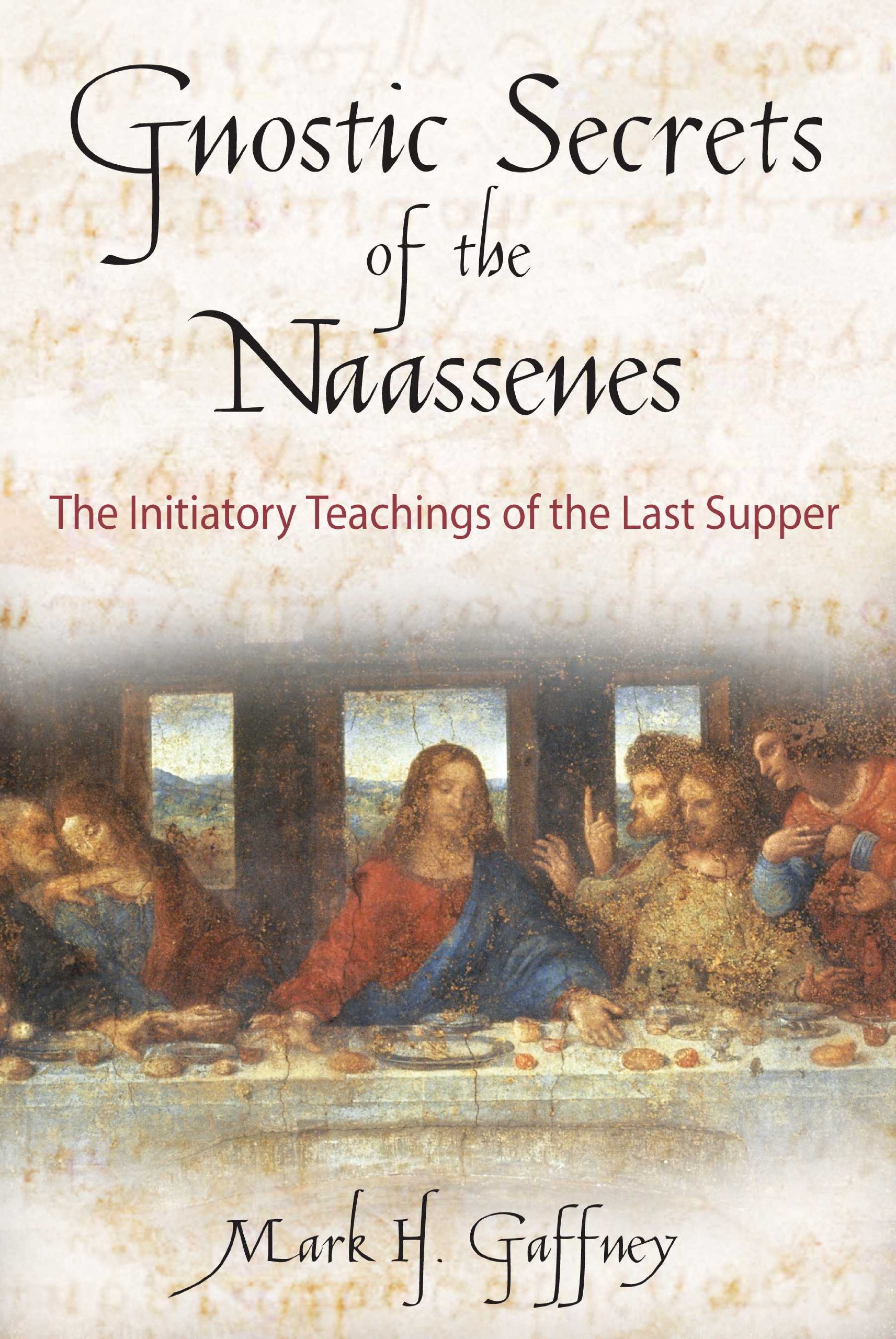
Book by Mark H. Gaffney
Here are some documents and books to look into further in your quest :
A Naassene Fragment (quoted by Hippolytus as a summary of the entire Naassene system)
The Gospel of Philip (evidently distinct from the Gospel of Philip of the Nag Hammadi Library)
The Gospel of Thomas
The Greek Gospel of the Egyptians
Thanks for visiting my blog! Click here to learn more and receive info about how you can make money too with a blog like this!
Life Coach, Entrepreneur, Social Media Expert, Musician, Yoga Teacher, World Traveler