Once upon a time, in a quaint village nestled amidst rolling hills, there lived a community known as the Nazoreans. They were a group of individuals who were revered by the villagers for their profound wisdom and unwavering commitment to the pursuit of truth and knowledge.
The Nazoreans were believed to be the branches of a timeless perennial wisdom that had been passed down through the ages. They were the custodians of ancient teachings and were entrusted with the responsibility of preserving and disseminating this invaluable wisdom to future generations.
From an early age, the Nazorean children were initiated into a rigorous training regimen. They would gather in a sacred grove, surrounded by ancient trees, to learn from the wise elders who imparted their knowledge with great reverence and care. The children were taught the secrets of the universe, the interconnectedness of all things, and the importance of living in harmony with nature.
As they grew older, the Nazoreans embarked on individual quests to deepen their understanding of the perennial wisdom. They traveled far and wide, seeking out ancient texts, studying under enlightened masters, and engaging in contemplative practices to unlock the hidden truths of existence.
Each Nazorean developed their unique area of expertise. Some delved into the mysteries of the stars, mapping constellations and deciphering the celestial language. Others immersed themselves in the healing arts, exploring the delicate balance between the body, mind, and spirit. Some studied the ancient scriptures and religious texts, drawing out the underlying spiritual principles that transcended time and culture.
Despite their diverse paths, the Nazoreans remained connected through a common thread—their unwavering commitment to the pursuit of wisdom and the greater good of humanity. They would periodically gather in the village square, where the elders would share their newfound insights and engage in spirited discussions that challenged and expanded their understanding.
The village revered the Nazoreans as beacons of knowledge and enlightenment. They sought their counsel in times of trouble and celebrated their achievements as if they were the triumphs of the entire community. The Nazoreans, in turn, embraced their role with humility, recognizing that the wisdom they possessed was not for personal gain but for the betterment of all.
As time passed, the village thrived under the guidance of the Nazoreans. Their wisdom permeated every aspect of life, shaping the values, customs, and relationships of the community. The villagers grew in their understanding of themselves and the world around them, finding solace and inspiration in the timeless teachings of the Nazoreans.
Generations came and went, but the perennial wisdom of the Nazoreans continued to flow like an eternal river. The village became a sanctuary of knowledge, a place where seekers from far and wide would come to drink from the well of wisdom that the Nazoreans had nurtured.
And so, the story of the Nazoreans as the branches of the timeless perennial wisdom of the ages became etched in the annals of history. Their legacy lived on, a testament to the transformative power of knowledge, and a reminder that the pursuit of wisdom was a lifelong journey that transcended the boundaries of time and space.
Thanks for visiting my blog! To learn more about this “Nazorean Wisdom” and to start your own journey with a team of like-minded and inspired wizards & seekers, forging a way to make the world a better place for all, just like you…
Click here & listen to our Daily Mastermind Call (recorded live Mon-Fri) & also I invite you to learn more about our premiere Home Business Academy here. I’m here to help! See You on the Inside!
The body is the Garden of Eden. The Head is the “Heaved Up Place” or the Dome of Heaven. The CSF (CerebroSpinal Fluid) is the river Gihon (Nile) one of the four rivers in the Garden of Eden mentioned in GeneISIS Chapter 2. It encompasses the land of EthiOpia which is the Etheric Optical or Optic Thalamus aka the Light Of The World. Accessed thru the Tree of Life aka the Vegus (Negus/King) Nerve. The 4 Rivers are in the Human anATOMy (Adam/Man). They are 4 heads that break off from the One River of Life which is SALiva/SALt/SALvation. The River of Saliva starting in the mouth is under the Pituitary (Peter) and above the Vegus Nerve which is connected to it. Both are associated with the Tree of Life.
The mouth eats the food of earth, breathes air, is wet with water. And speaks the word of Fire (4 elements).
Euphrates is the Blood Stream. It means “Good to Cross” and is referring to the heart barrier Torus field which shapes the sign of the Cross.
The Pison is the URinary tract. UR means Gold. It went thru the land of Havilah (possibly India) which scriptures mentions as having gold. Abraham also was from the land of UR.
The Hiddikel River which is the Tigris is the digestive tract that runs thru Babylon, if it becomes corrupted it poisons the whole world/body.
The Gihon/Nile is the CSF that flows up stream (Up the Spine/Micro Cosmic Orbit). It is also called the Chrism or Luminous Ether (5th Element that reaches the Medulla/Mouth Of God) which is the Anointing Oil, and is where we get the word Christ. Our Pineal Gland is constantly being bathed or Anointed with CSF. Gihon means “to burst forth”.
The Semen (as welll as all other Oils secreted from the various glands) is considered an extension of the Life-Giving Chrism. Oil backwards is Lio/Leo/Lion. The Libido energy has long been thought of as a Lion. Consider the Nazarite Samson who conquered the Lion in order to get the Honey. In the Gospel Of Thomas Christ says: “Blessed is the Man who eats the Lion so the Lion can become Man. But woe to the man who is eaten of the Lion before the Lion becomes Man”
The Conquering Lion of Judah, like the Buddha has conquered the Lion within. The Bible also tells us to be sober and vigilant because the devil is like a roaring Lion.
Most human bodies today function under the order of the god of this world. The secrets of Eden long forgotten but occasionally revealed by Great Awakened Beings.
Few are they who find the Way.
One of the hidden reasons for the practice of celibacy (Brahmacharya) in the seminary (semen-ary) has to do with the refining of semenial fluid thru sexual transmutation and raising up the Chrism. Sending Moses up the Nile… The fish/ seed that flows up stream until it reaches the land of milk (feminine lunar magnetic serotonin/melatonin ) and honey( masculine solar electric D.M.T/Divine Mental Transmutation)
The Mind of Is-Ra-El/ Single Eye of Eyesus which is unlocked in the Pineal/Penial discovered in GeneISIS 32.30 By Jacob who saw God face to face and lived. He was the grandson of SarAbram (Cerebrum) the Brahmins who became Fathers and Mothers of a New Race.
Let thine Eye Be Single (MAAThew 6.22).
In the New Testament the CSF is the Jordan/Yardin/Garden River. The Garden is protected with a sword of Fire. Christ said His baptism was one of Fire and Spirit. When our Pineal Gland is Baptized in the Jordan by being bathed in Chrism. The Oil sparks the Fire of Life and man literally receives the Holy Breath/Spirit. Higher Quality Chrism creates a greater flame and burns hotter. Christ said “those who are close to I are close to a Flame.”
To feed the flame you must use the reSPIRITory system to connect to Source Power and L.O.V.E (Law Of Vibrational Energy)… Man does not live off of bread alone but by the Word/vibration/Prana/life force that proceeds from the Mouth Of God (Medulla Oblangata at the base of the Skull/Golgotha.) The word EAT is hidden in the words brEATh and dEATh. These are the real names for the 2 trees ???? ???? in the garden. Physical orgasm drains the life force and brings death (tree of the knowledge of good and evil which is duality of birth and death), whereas using the breath raises the Chrism up the spine (Tree Of Life) and brings the blood/soul up to the head/Heaven where Khrist sits on the Throne in the center of the Brain surrounded by 12 cranial nerves (disciples) who are His “judges” . This is the Yoke/Yoga of Light that was taught by the Master Jesus and many other awakened Sons of the Most High.
Like the Apostle Paul who also knew the code of the 2 Trees and taught about the Fruit of the Spirit/Breath. One of them being Self Control which can be seen as Pranayama/Life-Force-Control/ Breath-Work/Shamanic Breathing.
The ancients spoke of healing through synchronized Breath with the Healer.
Let this same Mind that was in Yahshua also be in YOU. He left us the Sign of Jonah. Jonah means Dove which is a symbol of the Crown Chakra/Holy Spirit. Jonah is hidden in the belly of the fish/seed and must be raised up so that He can Speak the Word of Salvation to the “Gentiles” and save them with the At-One-Ment of Inner Anointing/Crystalizing/Christalizing. Why do you think he (Jonah) had the people of Niniveh fast pray and meditate for three days? He was teaching the same process God just took him thru. The same wilderness of meditation the Christ was in for 40 days. As Moses lifted the serpent in the wilderness of meditation so the Seed of Man must also be lifted up.
Read the book of RA-veilations (Revelations) and understand that the Mark of the Father is in the Forehead.
The hidden message in the Name RasTafari is “The Mark/Sign/Seal in the Head is Worthy of Reverence”
Swami Paramahansa Yogananda said: “The Spine and the Brain are the altars of God”
The legends of Mary Magdalene being an Ethiopian princess date back to the ancient times of the 1st & 2nd centuries. It is said that she was born in Egypt, either the daughter of a wealthy Jewish merchant or a princess of Ethiopia, and that she was raised near the temple of Isis in Alexandria. She was a revered princess, where it was believed she was trained in the art of healing and possessed magical powers.
When Mary Magdalene was about eighteen she received a message from God telling her to leave her home and travel to Galilee. There, she met Jesus and immediately recognized him as the Son of God. She began to follow him, and it is said that she was the first female to do so. After Jesus performed miracles and preached, Mary became his closest follower, traveling frequently with him teaching his message. She was eventually recognized as an apostle and it is said that Jesus openly acknowledged her.
The fame of Mary Magdalene as a follower of Jesus would continue even after his death. During the time of his crucifixion it was said that she had remained faithful to him, and after his burial, it is said that she had gone to his tomb. As such, Mary Magdalene has since become known as a symbol for faith, hope, and redemption.
Many folk tales and legends exist about Mary Magdalene’s origins. One such story tells of a faithful soldier from Ethiopia who pledged his life to serve the Lord. This soldier supposedly had a daughter named Mary, who was raised in a wealthy, royal home and was taught the ways of healing and magic. Some believe that this daughter was actually Mary Magdalene.
Regardless of the myths and legends, Mary Magdalene remains an enigmatic and inspiring figure from history, who is seen as a symbol of faith, love, and hope. Her Ethiopian roots and background continue to mystify and fascinate both religious and non-religious followers alike.
Mary Magdalene, she was the apple of His eye, His love for her held strong and deep and never did wander by.
He held her close and whispered soft, to her soul He could relate, and through their love they would transcend the meager trials of fate.
For Him she was a loving wife, whom He treasured to the core, the love between the two was like two birds forever they would soar.
The Holy Spirit was the link that brought them ever closer, their faith in each other kept them tighter than a silver closure.
The Sacred Union of the two upon a dark night in the woods, will be remembered till the end of time and the way that Mary could.
As Mary wept with divine love, she would cling tightly to His side, and while love in the world abounds, their bond is forever tied. ????
Thanks for visiting my blog! To learn more about the Law of Attraction and to start your own journey with a team of like-minded and inspired Entrepreneurs, forging a way to make the world a better place for all, just like you…
Click here & listen to our Daily Mastermind Call (recorded live Mon-Fri) & also I invite you to learn more about our premiere Home Business Academy here. I’m here to help! See You on the Inside!
The Anatomy of Enlightenment According to Esoteric Philosophy: A Look at “The Truth About the Serpent”
Esoteric philosophy speaks to the truth of the human spirit, providing a backdrop for understanding our connection to the cosmos and the divinity of our inherent selves. This ancient wisdom is rife with symbolism, particularly with reference to the serpent. One of its most beloved archetypes speaks to an anatomy that can unlock inner depths of power, passion and courage—essentially, it teaches us how to connect to our true selves and live a life of understanding and enlightenment. Taking a closer look at this ancient wisdom, let’s examine the anatomy of enlightenment as it relates to “the truth about the serpent” with references to how the Gnostics view the serpent, the idea of kundalini and the serpent in the Garden of Eden.
In regards to the Gnostics, the serpent archetype served as a symbol of the savior offering emancipation from ignorance and oppression. In the Gnostic creation story, the serpent is elevated to the status of saviour and teacher, elevating man to knowledge and understanding that is rooted in truth and freedom rather than imprisonment by ignorance. The serpent is also symbolic of the spiritual path, offering us divine knowledge as a way of liberating us from suffering and personal bondage. In esoteric philosophy, the image of the serpent is seen as a metaphor for spiritual knowledge and revealed truth—a representation of the power of awakening, or “yoga”, as it is commonly referred to—that exists within us, leading us on the path to enlightenment.
The serpent is particularly connected to the concept of kundalini energy. This energy is the power of pure, divine fluidity and movement within the body, awakening and opening the pathways to liberation and union with divine consciousness. Kundalini is understood to be a living force that resides within us, accessible through subtle yoga techniques and meditation. Through the channeling of kundalini energy, we can awaken the serpent within. Kundalini rises, also referred to as “Serpent Power”, connecting us with infinite sources of life-force and restoring the connection between our physical and spiritual bodies. The power of Kundalini is primal and pure, providing a route to the true self and ultimately the Divine.
The serpent also holds a special place in the story of the Garden of Eden. As the serpent in the garden, it is seen as a provider of knowledge and forbidden wisdom, enticing man and woman to come to understandings of truth, thus providing them with all the power of the divine. The serpent is seen as a figure of illuminative power and insight, providing the spark of understanding that propels us towards awakening and ultimately, enlightenment.
In summary, the anatomy of enlightenment is illuminated in the powerful symbolism of the serpent. As taught by esoteric philosophy and supported by the Gnostics, this archetype speaks to an inner power within each of us that can be recognized and tapped into via methods such as kundalini awakening and meditation. Additionally, the serpent serves to highlight the importance of knowledge and understanding and the power of this enlightenment in setting us free. Ultimately, by unlocking the mysteries of the serpent within, we can rise in our own power and activate the pathways of freedom, truth and connection to our greater source.
Thanks for visiting my blog! To learn more about the Law of Attraction and to start your own journey with a team of like-minded and inspired Entrepreneurs, forging a way to make the world a better place for all, just like you…
Click here & listen to our Daily Mastermind Call (recorded live Mon-Fri) & also I invite you to learn more about our premiere Home Business Academy here. I’m here to help! See You on the Inside!
In the early centuries of Christianity, a diverse array of cults emerged that were considered to be heterodox in the eyes of the early church fathers. One of the most enigmatic of these cults was the Naassenes, a sect of early Gnostic Christians who believed in a complex amalgam of Jewish and Greek traditions. This paper will analyze the rituals, beliefs, and veneration of the snake associated with the Naassenes, and how these elements encapsulate their an unusual Gnostic worldview.
Naassenes veneration of the Serpent Cross
The Naassenes were based in the region of Phrygia, where the cult figure Alexander is thought to have been born and raised. Although little is known of their origins, they exhibit a hybrid of Jewish and Greco-Roman influences. This combination is reflected in their practice of incorporating certain rituals and associated symbols into their beliefs, including the veneration of the snake.
The practice of honoring the snake was incredibly important to the Naassenes, and they saw it as a way to contact the divine. They viewed the snake as a spiritual signpost of sorts, as they held it to be a representation of Adam’s wisdom. They believed that the snake represented the secret knowledge of the imago dei (the divine image) and heavenly perfection, and saw it as a conduit for the flow of the Holy Spirit. As such, veneration of the snake was seen as a way to honor the ultimate source of wisdom and knowledge, which was in turn a way to seek spiritual transformation and growth.
Aside from the veneration of the snake, the Naassenes also incorporated other symbolic practices into their ritual. One example was their ritual of water baptism, which was thought to be a symbol of purification and enlightenment. The Naassenes also included rituals associated with fasting, with their members fasting in preparation for meditation and contemplation, as well as spiritual renewal. Interestingly, the Naassenes honored a rather eclectic pantheon of deities, including figures from both the Old and the New Testaments, as well as several Greco-Roman figures, suggesting the inclusion of these gods into the cult’s beliefs.
The veneration of the snake associated with the Naassenes suggests the presence of a unique worldview within the cult. By venerating the snake, the Naassenes could draw on an animistic conception of the spiritual realm, even while also affirming monotheism. Furthermore, the inclusion of Christian and Greco-Roman elements in their rituals and beliefs shows that they were no strangers to syncretic religious practices. Thus, the veneration of the snake combined with the hybrid nature of their religious views indicates that the Naassenes were Gnostics rather than simply a group of Christians who happened to have unusual beliefs.
The Naassenes sect were known only through the writings of Hippolytus of Rome.
Abraxas Stone or Gem from The Gnostics and their remains by Charles W. King, 1887. The letters are “ΙΑΩ” or “Iao” and “ΣΕΜΕΣ ΕΙΛΑΜ”, “Eternal Sun”.
The Naassenes claimed to have been taught their doctrines by Mariamne, a disciple of James the Just. The retention of the Hebrew form shows that their beliefs may represent the earliest stages of Gnosticism. Hippolytus regards them as among the first to be called simply “Gnostics”, alleging that they alone have sounded the depths of knowledge.
Naassene Sermon : The Naassenes had one or more books out of which Hippolytus of Rome largely quotes in the Philosophumena, which professed to contain heads of discourses communicated by James, the brother of Jesus, to Mariamne. They contained treatises of a mystical, philosophic, devotional, and exegetical character, rather than a cosmological exposition. A very interesting feature of the book seems to have been the specimens it gave of Ophite hymnology.
The writer (or writers) is possibly Greek. He does indeed use the Hebrew words Naas and Caulacau, but these words had already passed into the common Gnostic vocabulary so as to become known to many unacquainted with Hebrew. He shows a great knowledge of the religious mysteries of various nations. For instance, he dilates much on the Phrygian rites, and the whole section seems to be a commentary on a hymn to the Phrygian Attis.
Creation of Adam, Byzantine mosaic in Monreale
First Man
The Naassenes so far agreed with other Ophites that they gave to the first principle the names First Man and Son of Man, calling him in their hymns Adamas.
The First Man (Protanthropos, Adamas); the fundamental being before its differentiation into individuals (cf. Adam Kadmon).
The Son of Man; the same being after it has been individualized into existing things and thus sunk into matter.
Instead, however, of retaining the female principle of the Syrian Ophites, they represented their “Man” as androgynous; and hence one of their hymns runs “From thee, father, through thee, mother, the two immortal names.” They declared that “the beginning of Perfection is the gnosis of Man, but the gnosis of God is perfected Perfection.”
Although the myths of the earlier Ophite system are but lightly touched on, there is some trace of an acquaintance with them, as for example the myth that Adam was brought forth by the Earth spontaneously; he lay without breath, without motion, without stirring, like a statue; being made after the image of the First Man, through the agency of several Archons. In order for them to seize hold of the First Man, there was given unto Adam a soul, that through this soul the image of the First Man above might suffer and be chastened in bondage.
The Naassenes taught that their primary man was, like Geryon, threefold, containing in himself the three natures to noeron, to psychikon, to choikon; and so that in Jesus the three natures were combined, and through him speak to these different classes of men. From the living waters which he supplies each absorbs that for which his nature has attraction. From the same water the olive can draw its oil, and the vine its wine, and in like manner each other plant its special produce: chaff will be attracted by amber, iron only by the magnet, gold only by the prickle of the sea-hawk, so each according to his nature attracts and imbibes a different supply from the same source.
Three classes : Thus there are three classes of men and three corresponding churches :
Material (the Bound)—the heathen chiefly captive under the dominion of matter.
Psychic (the Called)—ordinary Christians.
Spiritual (the Elect)—out of the many called, the few chosen members of the Naassene sect.
Creation
The Naassene work known to Hippolytus would seem to have been of what we may call a devotional character rather than a formal exposition of doctrine, and this perhaps is why it is difficult to draw from the accounts left us a thoroughly consistent scheme. Thus, as we proceed, we are led to think of the first principle of nature, not as a single threefold being, but as three distinct substances; on the one hand the pre-existent, otherwise spoken of as the Good being, on the other hand the “outpoured Chaos,” intermediate, between these one called Autogenes, and also the Logos. Chaos is naturally destitute of forms or qualities; neither does the preexistent being himself possess form, for though the cause of everything that comes into being, it is itself none of them, but only the seed from which they spring.
Adam and Eve with the Serpent, Michelangelo
The Logos is the mediator which draws forms from above and transfers them to the world below. Yet he seems to have a rival in this work; for we have reference made to a fourth being, whence or how brought into existence we are not told, a “fiery God,” Esaldaios, the father of the idikos kosmos. That is to say, it was this fiery being, the same who appeared to Moses in the burning bush, who gave forms to the choical or purely material parts of nature. It is he who supplies the fiery heat of generation by which these forms are still continued. In this work the Logos had no part, for “all things were made through him, and without him was made nothing.” The “nothing” that was made without him is the kosmos idikos.
On the other hand, it is the Logos, who is identified with the serpent, and this again with the principle of Water, who brings down the pneumatic and psychical elements, so that through him man became a living soul. But he has now to do a greater work, namely, to provide for the release of the higher elements now enslaved under the dominion of matter, and for their restoration to the good God.
Generation
The Mysteries of the ancient world, it is taught, pertained to generation. The Lesser Mysteries pertained to the carnal, and the Greater dealt with the spiritual. Within the seed—sperma—is the Mystery of the Logos, as it is the original cause of all things that exist.
For the restoration of the chosen seed an essential condition is the complete abandonment of sexual intercourse between men and women. The captive people must pass out of Egypt; Egypt is the body, the Red Sea the work of generation; to cross the Red Sea and pass into the wilderness is to arrive at a state where that work of generation has been forsaken. Thus they arrive at the Jordan.
The Cross and Sacred Serpent Christ
This is the Logos through whose streams rolling downward forms had descended from above, and generations of mortal men had taken place; but now Jesus, like his Old Testament namesake, rolls the stream upwards, and then takes place a generation not of men, but of gods, for to this name the new-born seed may lay claim (Psalms 82:6). But if they return to Egypt, that is to carnal intercourse, “they shall die like men.” For that which is born from below is fleshly and mortal, that which is born from above is spiritual and immortal. This is the divine bliss—hidden, and yet revealed—of that which was, is, and will be—the kingdom of heaven to be sought for within.
The specimens already given present but a faint idea of the author’s method of scripture exegesis. Hippolytus declares that the verses of Paul in Romans 1:27 contain the key to their whole system, which he alludes to with a great deal of innuendo:
“And likewise also the men, leaving the natural use of the woman, burned in their lust one toward another; men with men working that which is unseemly, and receiving in themselves that recompense of their error which was meet.”
This “unseemly” being their Mystery of divine bliss, he states; “that heavenly, sublime, felicity, that absence of all form which is the real source of every form.” And baptism applied to none save the man who was introduced into this divine bliss, being washed with the Living Water, and “anointed with the Ineffable Chrism from the Horn, like David [was], not from the flask of clay, like Saul, who was fellow citizen with an evil daemon of fleshly desire.”
The Hermetic alchemists asserted that the Great Work was an opus contra naturam; Paul’s use of “against nature” (παρὰ φύσιν, Romans 1:26) may have been given a similar allegorical meaning by the Naassene exegete. It is certainly possible that the Naassenes viewed homosexuality as exemplifying their concept of androgyny. Carl Jung remarked, “such a disposition should not be adjudged negative in all circumstances, in so far as it preserves the archetype of the Original Man, which a one-sided sexual being has, up to a point, lost.” But as to evidence of any “unseemly” acts, Hippolytus writes that in every way, “they are not emasculated, and yet they act as though they were.”
Exegesis
The writer, it will be seen, makes free use of the New Testament. He seems to have used all the four Gospels, but that of which he makes most use is St. John’s. He quotes from Paul’s epistles to the Romans, Corinthians (both letters), Galatians, and Ephesians. There is a copious use also of the Old Testament; and besides we are told there is a use of the Gospel according to the Egyptians, and that of Thomas. But what most characterizes the document under consideration is the abundant use of pagan writings.
For the author’s method of exegesis enables him to find his system in Homer with as much ease as in the Bible. Great part of the extract given by Hippolytus is a commentary on a hymn to the Phrygian Attis, all the epithets applied to whom are shown when etymologically examined, to be aspects of the Logos. One of the first of the titles applied to Attis is papas—here we are taught to recognise him who brought to rest (epause) all the disorderly motion that prevailed before his appearing. To him all things cry paue, paue, ten asymphonian.
Serpent Grail
The serpent
Every temple, naos, shows by its title that it is intended for the honour of the serpent naas as “the Moist Essence,” of the universe, without which “naught at all of existing things, immortal or mortal, animate or inanimate, can hold together.” Furthermore, “all things are subject to Him, and He is Good, and has all things in Him … so that He distributes beauty and bloom to all that exist according to each one’s nature and peculiarity, as though permeating all.”
G.R.S. Mead has suggested that all of this is in reference to the Kundalini:
This is the cosmic Akāsha of the Upaniṣhads, and the Kuṇḍalinī, or serpentine force in man, which when following animal impulse is the force of generation, but when applied to spiritual things makes of a man a god. It is the Waters of Great Jordan flowing downwards (the generation of men) and upwards (the generation of gods); the Akāsha-gangā or Heavenly Ganges of the Purāṇas, the Heavenly Nile of mystic Egypt.
Eden
The Garden of Eden, in the Naassene system, is the brain, and Paradise the human head, with the four rivers having special significance:
Pishon, “that is it which compasseth the whole land of Havilah, where there is gold; And the gold of that land is good: there is bdellium and the onyx stone.”
Eyes (because of its dignity and colors that bear witness to what is said)
Gihon, “the same is it that compasseth the whole land of Ethiopia.”
Hearing (because of its being labyrinthine)
Tigris, “that which flows the opposite way to the Assyrians.”
Breathing (because “the current of it is very rapid; and it ‘flows the opposite way to the Assyrians,’ because after the breath is breathed out, on breathing in again, the breath that is drawn in from without, from the air, comes in more rapidly, and with greater force.”)
Euphrates
Mouth (because through prayer and food, a “man is rejoiced, and nourished and expressed.”)
In conclusion, the Naassenes were an early Christian Gnostic cult whose beliefs and practices encompassed a wide range of Jewish and Greco-Roman elements. Of particular importance to the cult was the veneration of the snake, which was seen as a representation of the connection to the divine and an access point to spiritual renewal and growth. This veneration is a clear sign of their complex and syncretic worldview, and shows that the Naassenes were true Gnostics, not just eccentric Christians.
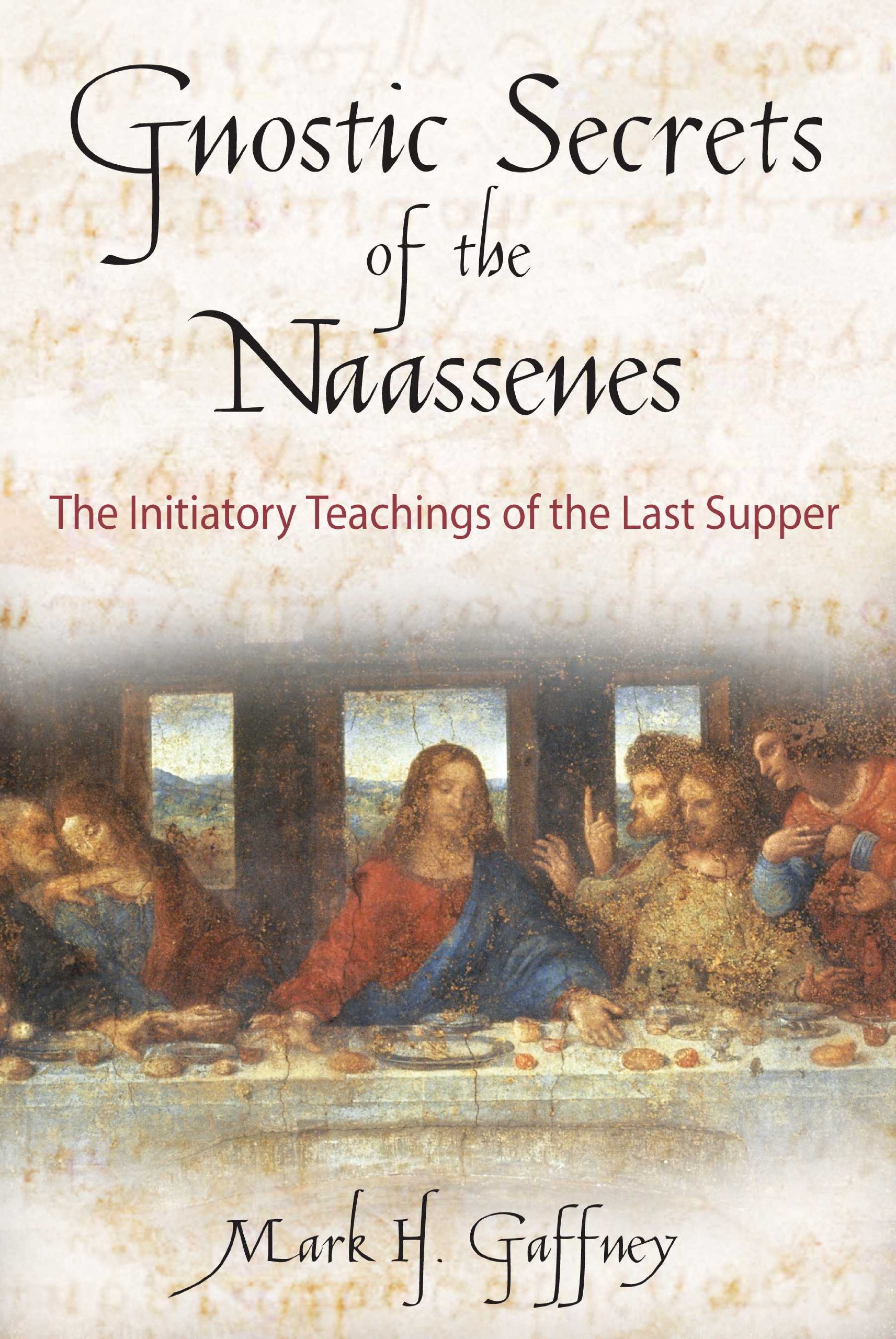
Book by Mark H. Gaffney
Here are some documents and books to look into further in your quest :
A Naassene Fragment (quoted by Hippolytus as a summary of the entire Naassene system)
The Gospel of Philip (evidently distinct from the Gospel of Philip of the Nag Hammadi Library)
The Gospel of Thomas
The Greek Gospel of the Egyptians
Thanks for visiting my blog! Click here to learn more and receive info about how you can make money too with a blog like this!
Discovered in 1945, The Apocalypse of Adam. 🍎 The Apocalypse of Adam, also known as the Revelation of Adam is Adam’s version of what happened in the garden of Eden. 🍒
Part of which Reads: “I went about with her in a glory which she had seen in the aeon from which we had come forth. She taught me a word of knowledge of the eternal God. And we resembled the great eternal angels, for we were higher than the god who had created us and the powers with him, whom we did not know.” 🫂
Omitted from the Bible because of what it reveals. Eve and the serpent are the hero’s of the story teaching Adam’s fruits of eternal knowledge. To “eat from” means to “take in and digest, or to fully understand.” Eve was sent to Adam from the eternal father that Jesus spoke of to remind Adam of who he really is, a light being imprisoned in the material world by a jealous creator god. This creator god made this imperfect material world that he fashioned afrer the eternal heavenly realm. Adam’s soul is what was needed to animate the flesh suit the creator god made as a prison for his soul, claiming he is a jealous God, demanding worship and unquestionable faith. 🐍
Jesus also tells this story in another book omitted from the Bible called the “Secret Book of John,” discovered in a cave in 1945.
Jesus quotes the creator god, and asked a question which reads; “I am a jealous God and there is no God but me!” 🤔
[But by doing this he admitted to his demons that there is indeed another God. For, if there were no other God, whom would he possibly be jealous of?] 🤔
Where The Bible starts from the creation of earth, what’s learned is this is actually a galatic story. Adam’s soul is known in this story as “the first knowledge that breathed within him,” aka his eternal spirit which was stolen from the heavenly realm. Eve was sent by the true eternal father located at the center of the galaxy. This is the father Jesus spoke of when he came to deliver the same message to humanity to help free us from the prison of the material realm. 🌎
This different interpretation than the story in the Bible will lead you to your true identity. 🪞 Gnosis or Awakening
Time of Nile’s kings hath come to pass Bringeth forth the great Queen of Egypt’s grass Cleopatra the Seventh, treasure of lore, Descended down the lineage to open a new door. Her dynasty would foretell of a holy birth Ancestor of a Son who cometh of Heaven’s mirth.
Thanks for visiting my blog! Click here if interested in making money with a blog just like this! 🪷
The Edessan-Nazarene Church was an initiatory ‘secret’ sect that took 7 years to join (this is how long it took Queen Helena). The Raising of Lazarus was a 3rd degree initiation demonstrating the hidden occult nature of the Church. A primary source of veneration for the Church was the zodiac and the Hamat zodiac at Tiberius was processional and depicted the Heliocentric solar system and a spherical blue-green Earth – long before Copernicus mentioned this, this Church possessed deep scientific and astronomical secrets. One of their symbols was the sacred elagabal stone – (Shiva Linga of Hinduism/ Kaba Stone of Islam) a sacred meteorite of great antiquity that may have been strongly magnetic. The Gali priests who venerated the stone were symbolic or possibly real eunuchs – suggesting that they venerated the Primeaval Adam, the First Man, who was androgynous. Pharaoh Akhenaton – the first pharaoh to depict himself as as androgynous and who is linked with the Exodus of the Hyksos (Israelite) people in Egypt and possibly the founder of Judaism – the Edessan-Nazarene Church followed this ancient tradition. The connection between the zodiac and the elagabal meteorite (the Phoenix) strongly suggests the Nazarene were Sabeans – star worshippers. We can see the processional zodiac once more in “Jesus” being born as Lamb of God (Aries) and becoming a Fisher of Men (Pisces). In the 18th century BC the Hyksos Israelites took on the might of Egypt to become the first of the Shepherd Kings (the Kings of Aries), because Taurus had turned to Aries in 1750 BC. Similarly, Jesus-Izas wanted to take on the might of Rome to become the first of the Fisher Kings (the King of Pisces) because Aries had turned to Pisces in AD 10. The Edessan Kings held the Kama (Kamza) title. Kama means “Black” coming from the land of Kam or Kemet/Egypt. In the works of Josephus he is called Jesus of Gamala. Gamala is another variant of Kamala meaning Jesus the Egyptian. In the works of Josephus, the Talmud & the New Testament we have Jesus being referred to as “the Egyptian” or “the Egyptian False Prophet” and stories of him doing Egyptian magic.
Master Hamid Bey was trained by Coptic masters in Egypt during the early 1900’s. His early education was focused on fundamental principles of self mastery leading him to the ultimate goal of complete mastery on the physical, mental and emotional levels. His early testing put him in life situations where he taught humility, the foundation of spirituality. Eventually he was taught how to put pins through his body without pain and how to be buried alive for hours at a time.
In the mid-1920’s, he was sent to the United States to teach the laws of balanced living. He was told one of his early missions in America was to challenge Houdini, who had indicated he was the only one on earth who could accomplish his memorable feats. By the time Master Bey arrived in the U.S., Houdini had passed away.
In the late 1920’s, he met Paramahansa Yogananda and they traveled together throughout America. They were two of the earliest and greatest pioneers of the metaphysical movement. Paramahansa would give the lecture and Master Bey would be buried alive in public, demonstrating the many skills of self mastery he learned during his early years of training by the Egyptian Coptic Masters.
The Mandaeans of southern Iraq are the only remaining Gnostic sect from ancient times. They began their history on Sri Lanka when the island was part of the land-mass of Lemuria and home of the primeval Goddess Culture. Eventually migrating west they became part of the Sumerian, Persian, Egyptian and Jewish Essene civilizations. Finally, retracing their steps, they returned to their present location. In the tradition of the ancient gnostic sects descended from the Goddess and the Left Hand Path, the Mandaeans are dedicated to the achievement of gnosis for all their people, which they know involves the balance and union of the polarity and the alchemical force that results from that union.
To engender the balance and union of the polarity in their culture, the Mandaeans provide equal rights for both men and women. They are governed by their priest/priestess class, which is composed of both men and women. The centerpiece of their religion is the rite of baptism which is observed daily, during which is invoked the presence of the ancient Dragon Enki, the embodiment of the alchemical Kundalini, under his contemporary name of Manda d’Hiya. Enki is the “Water of Life,” the subtle alchemical force that moves within the physical water of the Tigris and Euphrates Rivers. When activated it purifies Mandaeans on all levels and can awaken their “inner Enki,” the Kundalini power at the base of the spine.
The daily baptismal immersion of a Mandaean, known as the “Rishama,” a prayer is repeated while each part of the body is sequentially cleansed. At the end of the rite, the power and wisdom of ancient Enki as Manda d’Hiya is invoked with the words: “The name of the Life [the Divine Power] and the name of Manda d’Hiya [the Divine Wisdom] are pronounced upon me.”
The most powerful of baptisms are observed on Sunday under the guidance of a Mandaean priest and incorporate much more ritual than the Rishama. They include the sacraments of oil, bread, and water, and end with the sacred kiss upon the head from a priest, a rite known as “giving Kushta.” Possibly the most valuable part of the ceremony for a person’s spiritual progress is a special transmission of energy given them by the priest or preistess, who after the water immersion transmits the Water of Life or Kundalini power into a baptized Mandaean by placing their right hand upon his or her head and calling forth Manda d’Hiya.
At the conclusion of their life, all Mandaeans rise up to Mshunia Kushta, an etheric dimension where they merge with their etheric-body double that has been waiting for them during their earthly sojourn. When asked the location of this etheric world, the priests give the description of an etheric world that apparently overlays the planet Venus and mimics the Earth when it was the Garden of Eden. One Mandaean priest has stated: “There is a star inhabited by men, the descendants of the Hidden Adam [the etheric double of Adam], but they are semi-spiritual in nature, and not gross like ourselves. This star is called Merikh, the star of the morning.” The Mandaean baptismal purifications continue on this “star” until each Mandaean is ready to shed his or her etheric forms and live exclusively in their most refined bodies of light as pure luminaries of gnosis. They are then eligible to return home through the Pleiades stargate to the highest Pleroma worlds of light.
From Mark Amaru Pinkham – Author : THE GNOSTIC CIVILIZATION OF THE MANDAEANS (Excerpted from World Gnosis: Coming Gnostic Civilization)
PHOTO: A Mandean baptism in the Tigris River, May 2003. Credit : Oleg Nikishin/Getty Images
Life Coach, Entrepreneur, Social Media Expert, Musician, Yoga Teacher, World Traveler