Category Archives: Travel

Atlantis

Artist: J Augustus Knapp

In the Critias, Plato describes in detail the divine foundation of the Atlantean Empire, originally known as Poseidonis. The goldenage preserved in myth and legend, when gods walked with men, depicts the zenith of the Atlantean civilization.

The demigods of the ancient world were the Atlanteans, to whom every civilized nation owes an incalculable debt of gratitude. In the British Museum there is a remarkable document – known as the Troano manuscript – which was written over 3,500 years ago by the Mayas of Yucatan, containing an authentic account of the cataclysm which sank the continent of Atlantis.

This priceless document contains the following statement according to the translation by Le Plongeon: “In the year 6 Kan, on the 11th Mulac in the month Zac, there occurred terrible earthquakes, which continued without interruption until the 13th Chuen. The country of the hills of Mud, the land of Mu, was sacrificed; being twice upheaved it suddenly disappeared during one night, the basin being continually shaken by volcanic forces. Being confined, these caused the land to sink and to rise several times and in various places. At last the surface gave away and ten countries were torn asunder and scattered; unable to stand the force of the convulsions, they sank with their 64,000,000 inhabitants.”

Before the Atlantean continent was submerged, the initiates of the Atlantean Mysteries, carrying with them the secret doctrines entrusted to their keeping, immigrated into Egypt and other parts of the Earth where they would be safe from the impending catastrophe. Thus their secret teaching – with its priceless value to subsequent ages – was preserved. They established centers of learning and promulgated the code, clothed in language of symbolism, to such as they deemed worthy to receive it.

(from The Secret Teachings of All Ages by Manly P Hall)

Was Jesus Christ born as Caesarion? (Son of Julius Caesar & Cleopatra)

Recently, I came across a theory that has been blowing my mind and keeping me up at night. The implications of this theory, if true, could mean so much to the history of our planet and how we think about the historic person, Jesus Christ.

The theory is that Jesus could be the historic Egyptian Pharaoh Caesarion, the only son of Julius Caesar and Cleopatra.

I’m trying to figure out all the possible reasons.. if true, that this story would be covered up… as such a important historic couple having a son (heir to the throne of Caesar & Cleopatra) would most definitely be a threat the leaders of Rome & Judea of the time.


Here’s what I got so far :


1) Caesarion (Jesus) is the only son of Julius Caesar (who was deified after his death as a God)


2) As son of Cleopatra, which indicates African/Egyptian, Greek and Hebrew blood..


3) He would be a mixed child of African/Egyptian descent which the ruling class didn’t want to portray him as dark skin (hence the “White Jesus”)


4) There is no actual historic evidence of Jesus in the historic records besides the 4 Gospels… which isn’t necessarily considered historic proof but Caesarion and his brothers and sister are in the historic record connecting them to Julius Caesar, Cleopatra, half Brother’s James and Thomas and half sister Cleopatra Selene (Magdalene), their history disappears in the Egyptian Record right when their story begins in the 4 Gospels. Also, Caesarion and Jesus were both associated with Joseph of Aramithea also know as Joesph of Judea…


5) If true, it makes Jesus a man that reached enlightenment or the Christhood like Gnostics believed and not “God” in the way Roman Catholics and mainline Christianity believes him to be..


6) The stories of Caesarian going to India and Nepal line up during the same years as the lost years of Jesus. Roman Catholics and mainline Christians don’t want Jesus associated with and learning from Hindus and Buddhists…


7) Jesus marrying his half sister would be problematic for multiple reason to mainline Christianity because he has sex and children as “a man” and not the celibate “God” as he is portrayed, and it would be likely taboo to promote a God/King/Savior who had kids with his half sister…


8) The ruling Roman Emperors and Jewish elite didn’t want their power stripped by the true Christ…

9) Caesarion was also know as Issa or Esau which in Egyptian meant “son of Isis”. In India, he was known as St. Issa. When he returned to Egypt after traveling through-out India and Nepal, which was now very much Hellenized by Roman and Greek influence, he was known by the Greek version of his name Jesus the Christ (the Christ being a title of enlightenment and translates literally as “the anointed one”. As Jesus the Christ, he now carried the same initials as his father J.C. Julius Caesar.

10) Cleopatra was known at the time as the reincarnation of the Goddess Isis, connecting Caesarion and Jesus the savior god Horus (many scholars believe Jesus is based on the legends of Horus). Cleopatra was versed in the healing arts, as were the ancient Essenes she associated with. It would make sense that Caesarion/Jesus would’ve learned some of his healing abilities from his mother Cleopatra and the Essenes.

11) All the Masonic Orders, Secret Societies, and most Mystery Schools trace their lineages back to Ancient Egypt.


That’s all I got for now… but it seems there are many other implications to this theory. According to this theory, Cleopatra feared for the life of Caesarion and had him sent to India to hide from the existing tyrant Roman Emperor Octavian who would’ve wanted his death. She sent him away with 2 adopted parents supposedly named Joseph and Mary, who were Essenes.

In the New Testament, we have the story of Jesus fleeing through Egypt with his parents Jospeh and Mary and him amazing the elders in the temple in Egypt with his profound knowledge.

According to legends, Jesus and Caesarion both were educated in the historic library/school in Alexandria, which was later burned to the ground by the Roman Catholics. This ancient school was believed to be one of many Essene schools around the ancient world, others were in places such as India, Ethiopia, Persia and Greece. If this theory is true, it could make sense that Cleopatra sent Caesarion with her trusted Essene friends to hide out and continue his learning amongst the Essene Schools in India, and also Jesus’ association with a father and mother named Joseph and Mary. This could also help support the theory that Jesus was a Gnostic Essene, associated with the Essenes of Qumran, where the Dead Sea Scrolls were found.

This theory also implies a possible bloodline connection to the world’s elite, the British Royal Family and Illuminati bloodlines.

Another theory is that Jesus survived the crucifixion. That’s where he was covered in linen cloth, aloe and myrrh, a possible Ayurvedic cure, by none other than Jospeh of Aramithea, then after being revived, he supposedly flees from Judea to live out the rest of his life in India. Also, according to the Koran and Islamic legend, Jesus survived the crucifixion.

Then there is the DaVinci Code theory which ties into this whole thing, which the bloodline being continued by Jesus and Mary Magdalene having children. According to this theory, Mary Magdalene flees Egypt with their daughter “Sarah the Egyptian” to the southern coasts of France with none other than Joseph of Aramithea. Even today, once a year in the south of France, a big celebration with a mock-boat and figurines depicting Mary Magdalene, Jospeh of Aramithea and the child, Sarah the Egyptian, arriving in France to mark its historic significance. And you can find several small churches devoted to these characters in France and even the supposed burial tomb of Mary Magdalene. This whole story supposedly is the basis of the Merovingian Dynasty tracing their bloodline to the children of Jesus and Mary Magdalene.

My theory is that this bloodline has several branches and that while it is possible that the Royal Family of England can trace their bloodline to this union, it is also possible that others, far less deviant than the Global Elites, can trace their bloodlines to this union as well. The idea is that there are 12 tribes of Israel and the Merovingian Dynasty being the 13th, hidden tribe.

What do you think? Does any of this make sense to you?
Please share if you have any more relevant info.

The main source for this theory is from the documentary movie called “Ring of Power”
For more info on Caesarion Jesus, visit :

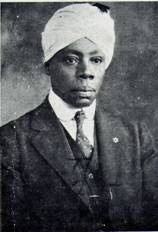
Rabbi Arnold Josiah Ford: A Moses to His People

Ford, Arnold Josiah (23 Apr. 1877-16 Sept. 1935), rabbi, black nationalist, and emigrationist, was born in Bridgetown, Barbados, the son of Edward Ford and Elizabeth Augusta Braithwaite. Rabbi Ford asserted that his father’s ancestry could be traced to the Yoruba tribe of Nigeria and his mother’s to the Mendi tribe of Sierra Leone. According to his family‟s oral history, their heritage extended back to one of the priestly families of the ancient Israelites, and in Barbados his family maintained customs and traditions that identified them with Judaism (Kobre, 27). His father was a policeman who also had a reputation as a “fiery preacher‟ at the Wesleyan Methodist Church where Arnold was baptized; yet, it is not known whether Edward’s teaching espoused traditional Methodist beliefs or embodied the radical reconsiderations of Christianity and the embrace of Judaism that his son would later advocate.

Ford’s parents intended for him to become a musician. They provided him with private tutors who instructed him in several instruments—particularly the harp, violin, and bass. As a young adult, he studied music theory with the Edmestone Barnes of London and in 1899 joined the musical corps of the British Royal Navy, where he served on the HMS Alert. According to some reports, Ford was stationed on the island of Bermuda, where he secured a position as a clerk at the Court of Federal Assize, and he claimed that before coming to America he was a minister of Public Works in the Republic of Liberia, where many ex-slaves and then early black nationalists attempted to settle.

When Ford arrived in Harlem around 1910, he gravitated to its musical centers rather than to political or religious institutions—although within black culture, all three are interrelated. He was a member of the Clef Club Orchestra, under the direction of JAMES REESE EUROPE, which first brought jazz to Carnegie Hall in 1912. Other musicians who were black and Jewish, such as Willie “the Lion” Smith, an innovator of stride piano, also congregated at the Clef Club. Shortly after the orchestra’s Carnegie Hall engagement, Ford became the director of the New Amsterdam Musical Association. His interest in mystics, esoteric knowledge, and secrete societies is evidenced by his membership in the Scottish Rite Masons, where he served as Master of the Memmon Lodge. It was during this period of activities in Harlem that he married Olive Nurse, with whom he had two children before they divorced in 1924.

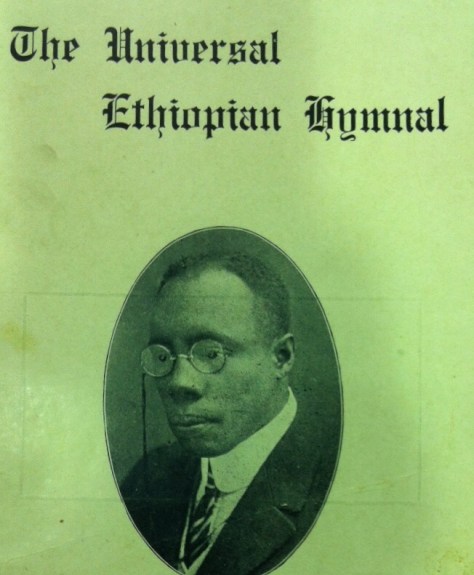
In 1917 MARCUS GARVEY founded the New York chapter of the Universal Negro Improvement Association [UNIA]. Within a few years it had become the largest mass movement in African American history. Arnold Ford became the musical director of the UNIA choir, Samuel Valentine was the president, and Nancy Paris its lead singer. These three became the core of an active group of black Jews within the UNIA who studied Hebrew, religion, and history, and held services at Liberty Hall, the headquarters of the UNIA. As a paid officer, Rabbi Ford, as he was then called, was responsible for orchestrating much of the pageantry of Garvey’s highly attractive ceremonies. Ford and Benjamin E. Burrell composed a song called “Ethiopia,” the lyrics of which spoke of a halcyon past before slavery and stressed pride in their African heritage—two themes that were becoming immensely popular. Ford’s efforts in the movement place him in the category of GEORGE ALEXANDER MCGUIRE, Chaplain-General of the UNIA, and various Islamic and Christian clergy who were each trying to influence the religious direction of the organization.

Ford’s contributions to the UNIA, however, were not limited to musical matters. He and E.L. Gaines wrote the handbook of rules and regulation for the African Legion (which was modeled after the Zionist Jewish Legion) and developed guidelines for the Black Cross Nurses. He served on committees, spoke at rallies, and was elected one of the delegates representing the 35,000 members of the New York chapter to the “First International Convention of Negro Peoples of the World,” held in 1920 at Madison Square Garden. There the governing body adopted the red, black, and green flag as its national ensign and Ford‟s song “Ethiopia” became the “Universal Ethiopian Anthem,” which the UNIA constitution required be sung at every gathering. During that same year, Ford published the Universal Ethiopian Hymnal. Ford was a proponent of replacing the disparaging term “Negro” with the term “Ethiopian,” as a general reference to people of African descent. This gave the line in Psalm 68 that “Ethiopia shall soon stretch out her hand to God,” a new significance and it became popular slogan of the organization. At the 1922 convention, Ford opened the proceedings for the session devoted to “The Politics and Future of the West Indian Negro,” and he represented the advocates of Judaism on a five-person ad hoc committee formed to investigate “the Future Religion of the Negro.” Following Garvey’s arrest in 1923, the UNIA loss much of its internal cohesion. Since Ford and his small band of followers were motivated by principals that were independent of Garvey’s charismatic appeal, they were repeatedly approached by government agents and asked to testify against Garvey at trial, which they all refused to do. However, in 1925, Ford brought separate law suits against Garvey and the UNIA for failing to pay him royalties from the sale of recordings and sheet music, and in 1926 the judge ruled in Ford’s favor. Yet, despite his personal and business differences with the organization, Ford remained active in the UNIA as a rabbi, giving invocations and benedictions.

Several black religious leaders experimented with various degrees of Judaism between the two world wars. Rabbi Ford formed intermittent partnerships with some of these leaders. He and Valentine started a short lived congregation called Beth B’nai Israel. Ford then worked with Mordecai Herman and the Moorish Zionist Temple, until they had an altercation over theological and financial issues. Finally, he established Beth B’nai Abraham in 1924. A Jewish scholar who visited the congregation described their services as “a mixture of Reform and Orthodox Judaism, but when they practice the old customs they are seriously orthodox” (Kobre, 25). Harlem chronicler JAMES VANDERZEE photographed the congregation with the Star of David and bold Hebrew lettering identifying their presence on 135th Street and showing Rabbi Ford standing in front of the synagogue with his arms around his string bass, and with members of his choir arrayed at his side, the women wearing the black dresses and long white head coverings that became their distinctive habit and the men donned in white turbans.

In 1928, Rabbi Ford created a business adjunct to the congregation called the B’nai Abraham Progressive Corporation. Reminiscent of many of Garvey’s ventures, this corporation issued 100 shares of stock and purchased two buildings from which it operated a religious and vocational school in one and an apartment house in the other. However, the resources to sustain this enterprise dwindled as the Depression became more pronounced, and the corporation went bankrupt in 1930. Once again it seemed that Ford’s dream of building a black community with cultural integrity, economic viability, and political virility was dashed, but out of the ashes of this disappointment he mustered the resolve to make a final attempt in Ethiopia. The Ethiopian government had been encouraging black people with skills and education to immigrate to Ethiopia for almost a decade, and Ford knew that there were over 40,000 indigenous black Jews already in Ethiopia who called themselves Beta Israel, but who were commonly referred to as Falasha. The announced coronation of Haile Selassie in 1930 as the first black ruler of an African nation in modern times raised the hopes of black people all over the world and led Ford to believe that the timing of his Ethiopian colony was providential.

Ford arrived in Ethiopia with a small musical contingent in time to perform during the coronation festivities. They then sustained themselves in Addis Abba by performing at local hotels and relying on assistance from supporters in the United Sates who were members of the Aurienoth Club, a civic group of black Jews and black nationalists, and members of the Commandment Keepers Congregation, led by RABBI W. A. MATTHEW, Ford‟s most loyal protégé. Mignon Innis arrived with a second delegation in 1931 to work as Ford’s private secretary. She soon became Ford’s wife, and they had two children in Ethiopia. Mrs. Ford established a school for boys and girls that specialized in English and music. Ford managed to secure 800 acres of land on which to begin his colony and approximately 100 individuals came to help him develop it. Unbeknownst to Ford, the U.S. State Department was monitoring their efforts with irrational alarm, dispatching reports with such headings as “American Negroes in Ethiopia—Inspiration Back of Their Coming Here—”Rabbi Josiah A. Ford,” and instituting discriminatory policies to curtail the travel of black citizens to Ethiopia. [Explain why briefly]

Ford had no intention of ever leaving Ethiopia, so he drew up a certificate of ordination (shmecha) for Rabbi Matthew that was sanctioned by the Ethiopian government with the hope that this document would give Matthew the necessary credentials to continue the work that Ford had begun in the United States. By 1935 the black Jewish experiment with Ethiopian Zionism was on the verge of collapse. Those who did not leave because of the hard agricultural work, joined the stampede of foreign nationals who sensed that war with Italy was imminent and defeat for Ethiopia certain. Ford, it was said, died of exhaustion and heartbreak in September, a few weeks before the Italian invasion.

Further Reading

The papers of Rabbi Ford are held largely in private collections; however, correspondence between Ford and Matthew is contained in the Rabbi Matthew Collection at the Schomburg Center for Research in Black Culture, along with other collections relating to Harlem’s black Jews. Detailed records of Ford‟s efforts in Ethiopia are available at the National Archives, State Department Records for Ethiopia.

King, Kenneth J. “Some Notes on Arnold J. Ford and New World Black Attitudes to Ethiopia,” in Black Apostles: Afro-American Clergy Confront the Twentieth Century, Randall Burkett and Richard Newman, eds. (1978).

Kobre, Sidney. “Rabbi Ford,” The Reflex 4, no. 1 (1929): 25-29. Scott, William R. “Rabbi Arnold Ford‟s Back-to-Ethiopia Movement: A Study of Black Emigration, 1930-1935,” Pan-African Journal 8, no. 2 (1975):191-201. and Richard Newman (1978) and William R. Scott. “Rabbi Arnold Ford‟s Back-to- Ethiopia Movement: A Study of Black Emigration, 1930-1935,” Pan-African Journal 8, no. 2 (1975): 191-201.

*This article was published by Rabbi Sholomo Levy in African American Lives (2004) and the African American National Biography (2008). Both volumes were edited by Henry Louis Gates Jr. and Evelyn Brooks Higginbotham and printed by Oxford University Press.

How Krishna was transformed from a tribal deity to a Supreme God in the Puranic tradition

by Ruchika Sharma.

Krishna is one of the most popular deities of the Puranic pantheon. A warrior, a child god of a pastoral tribe, a preacher, and a love deity, his saga is an amalgamation of many disparate elements in one harmonious and coherent whole.

Krishna’s story, which developed over more than 800 years, was worked backwards. One first encounters the adult Krishna, a friend of the Pandavas and founder of the city of Dwarka, and then meets Krishna Gopala, the cowherd child and the lover of rasas, or dances.

Krishna’s journey begins as a hero of the Vrishni tribe, part of the Yadava clan, and ends with him being hailed as the Vishnu incarnate.

Krishna and Vasudeva

As Freda Matchett notes in her book Krsna, Lord Or Avatara? The Relationship Between Krsna and Visnu, both Krishna and Vasudeva were originally heroes of the Satvatta and Vrishni tribes of the Yadava clan who were eventually deified and with time, became synonymous with each other.

The first mention of Krishna, as early as sixth century BCE, in the Chhandogya Upanishad, refers to him as a sage and a preacher. He is also mentioned as Devakiputra (son of Devaki).

By the fourth century BCE, Panini’s Ashtadhyayi, a treatise on grammar, not only presents a deified Krishna but also gives details about the tribe to which he originally belonged – the Vrishnis.

Indica byMegasthenes, a Greek envoy to the court of a Maurya King, talks about how the Surasenoi (Surasens, a branch of the Yadava-Vrishni tribe) worshipped Heracles (Krishna) in Mathura. Thus, by fourth century BCE, not only is Krishna-Vasudeva transformed from a hero to a deity but he has also become fairly popular.

Krishna as a Vishnu incarnate

By the second century BCE, Vedic worship had become rigid and Vedic sacrifices expensive. Alongside this, Buddhism was gaining ground, fuelled by King Ashoka’s propaganda. The large-scale entry of foreign invaders, (such as the Shakas) who were favourably inclined towards Buddhism and other popular cults, weakened the authority of the priestly class.

Moreover, improved economic conditions of the lower varnas challenged caste rules. Hence, as Suvira Jaiswal argues in her book The Origin and Development of the Vaisnavism, “Brahmins seized upon the devotional cult of Vasudeva-Krishna and recognised it as a form of Narayana-Vishnu to infuse Brahmanical social ethics into this popular cult and re-establish their authority.”

Narayana and Vishnu were initially perceived as separate deities and later unified.

Thus, in this period, Krishna-Vasudeva was fused with Narayana-Vishnu and came to feature in the Mahabharata as a war hero and in the Bhagvada Gita as a preacher. Yet, the Mahabharata, in several places, reveals a hesitancy to accept a non-Aryan tribal deity as a higher god. This is why Krishna-Vasudeva is initially described as the incarnation of only a fraction of Narayana-Vishnu.

Bal Krishna

Till the first century BCE, Krishna was only worshipped in his adult form – as a preacher, a friend of the Pandavas, a Yadava-Vrishni hero and a Vishnu incarnate. What was missing from his grand narrative was a childhood.

Krishna-Gopala (or Krishna the cowherd) surfaced when Krishna was fused with another god of the Abhira (Ahir) tribe. Even though it has not been established whether the Abhiras were native to the Indian subcontinent or were immigrants, it is quite clear that in the first-century CE, the tribe was living in the lower Indus Valley and eventually migrated to Saurashtra. They became politically active under the rule of the Shakas and the Satavahanas.

The Krishna-Vasudeva of the Vrishnis was identified with the cowherd deity of the Abhiras because of the similarities between the two tribes, especially in the way they perceived women.

Krishna in the Mahabharata counsels Arjuna to acquire Subhadra, Krishna’s sister, by force and says that would be in keeping his Dharma, or religious law. He thereby hints that this must have been a common practice among Vrishnis.

Similarly, when Arjuna is escorting Vrishni women, his entourage is attacked by Abhiras, who take the women away. The identification of Krishna-Vasudeva with the Abhira deity also introduced the amorous dalliances of Krishna with the milkmaids (gopis).

The Abhiras, being a nomadic tribe, allowed for a greater freedom of the sexes. Hence, their god came to acquire the erotic elements that were, in time, identified with Krishna.

Krishna as Supreme

We know that Krishna-Gopala is a later addition to the Krishna saga because the original story of the Mahabharata makes no mention of Krishna’s childhood. It is in the Harivamsa (dated fourth century CE), a later appendage to the Mahabharata, that the Krishna-Abhira identification was given concrete shape.

From the first to fifth centuries CE, Puranic epics such as the Vishnu Purana, and the Harivamsa weaved the fragmentary connections of Krishna-Vasudeva-Narayana-Vishnu into a coherent whole.

Krishna was now born as a Kshatriya (or warrior caste) of the Yadava clan and his second name, Vasudeva, was explained away as a patronym (the name “Vasudeva” was given to his father). Fearing the wrath of his uncle, Kamsa, Krishna was eventually smuggled into the cowherd tribe of the Abhiras.

In time, the lover of gopis and the pastoral god matured into Arjuna’s sarthi (charioteer) and preacher advocating the principles of Dharma. The narrative was finally complete when the initial hesitancy of accepting a tribal deity as an incarnation of a higher god was also removed when the Bhagvata Purana, dated to the sixth century CE, hailed him as the Supreme One.

Thanks for visiting my blog! I hope you got lots of VALUE from this post! Questions or Comments always welcome!! Thank you!

~Sakshi Zion

Ps. Get Access Now to my FREE Ebook! How I use the Law of Attraction to travel the world and live my dreams!!

The Naga – Ethiopia and India Connection

The Naga

Naga/Nagash was also the title 'King' for the ancient Semitic speaking people of modern Ethiopia who lived in Arwe, and ancient kingdom in Punt. In addition, the ability of the Ethiopians as sailors, is supported by the title bahr nagash, "ruler of the maritime province" or Eritrea.

According to Ethiopian traditions the first empire was founded by Za Besi Angabo, of the Arwe line which ruled Ethiopia for 350 years. This dynasty began in 1370 B.C. The traditions of this dynasty are recorded in the Kebra Nagast , or "Glory of Kings". (Doresse 1971)

The greatest and most famous of the rulers of Arwe was the Queen of Sheba, known as Makeda of Tigre, and Bilkis to her subjects in South Arabia. (Windsor 1969, p.38-39)

Za Sebado, was the grandfather of Makeda, he ruled Ethiopia from 1076-1026 B.C., his wife was named Cares. Makeda was born in 1020 B.C., and ascended the throne in 1005 B.C., she ruled Ethiopia and South Arabia until 955 B.C. During her rule she visited King Solomon of the Jews. Here Makeda was impregnated by Solomon.

Makeda had a son. He was named Ebna Hakim, from his descendants Hebrewism came to Ethiopia.

Queen Makeda had a residence near Axum, but the main capital of Arwe was located along the southern end of the African shores of the Red Sea in a district called Azab, Asabe or Saba, which meant in the Tigrinya language of the time "the southern lands".

The name Sheba , was a variation of the name Saba or a specific designation. (Doresse 1971)

When Ebna Hakim took the throne, his mother had already established colonies in Arabia and India. Hakim took the name of Menelik I in 955 B.C. At Axum, Menelik established his capital. The first city of Axum was at Dar'o Addit Kilte.

Menelik I, ruled an empire extending from the Blue Nile to Eastern India. He later, according to tradition, made the empire much larger. After Menelik the people of Arwe worshipped either Hebrewism or the serpent Arwe.

The most important King of Arwe ,after Menelik was King Geder of the city of Nouh, or Sabo, a suburb of Axum. The Kings of Arwe controlled the gold of the Fezoli region of Ethiopia, as revealed by archaeological excavation in the Kerem district in the North and the Edola area in the southern Ethiopia.

Their gold fields in Meroitic Kush, and Sofala in Mozambique produced considerable amounts of gold.

The civilizations of modern Ethiopia are characterized by the practice of agriculture via irrigation and terracing. Ethiopians had a knowledge of wheat and barley long before 1000 B.C. Soft wheat cultivation was concentrated around the centers of Axum, Harar and Addis Ababa.

The farmers of Arwe used the plough and the hoe or digging stick to prepare their fields for cultivation. From here the plough was taken to South Arabia.

The Puntites have had many religions. Before Christianity and Hebrewism their religion consisted of several gods. The people worshipped the serpent Arwe.

The other gods were good and evil. These gods evolved into a series of distinctly Puntite gods including: Sin, the moon god (he was called Amuqah in Aowa); Ashtar, the planet Venus; Nuru, the Shinning One; Bahr, the sea god; Medr, the earth god; and Mahram , the god of war. The god Mahram was often identified with the planet Mars.

Due to trade relations of Punt with other lands Puntites originally probably used the Proto-Saharan script to keep proper records. Over time this writing system was modified, to form an alphabetic system.

The first writing created by the Puntites was Sabaean. The earliest inscriptions written in this script were found at Haoulti , Ethiopia. These inscriptions are over 3000 years old. The Ethiopians also took writing to South Arabia and later India. Both Thamudic and Ethiopic scripts are derived from the Sabaean writing. (Drewes 1962; Doresse 1971)

In fact the Ethiopians ruled much of India. These Ethiopians were called Naga. It was the Naga who created Sanskrit.

A reading of ancient Dravidian literature which dates back to 500 BC, gives us considerable information on the Naga. In Indian tradition the Naga won central India from the Villavar (bowmen) and Minavar (fishermen). The Naga were great seamen who ruled much of India, Sri Lanka and Burma. To the Aryans they described as half man and snake. The Tamil knew them as warlike people who used the bow and noose.

The earliest mention of the Naga, appear in the Ramayana, they are also mentioned in the Mahabharata. In the Mahabharata we discover that the Naga had the capital city in the Dekkan, and other cities spread between the Jumna and Ganges as early as 1300 BC. The Dravidian classic, the Chilappathikaran made it clear that the first great kingdom of India was Naganadu.

The Naga probably came from Kush-Punt/Ethiopia. The Puntites were the greatest sailors of the ancient world. In the Egyptian inscriptions there is mention of the Puntite ports of Outculit, Hamesu and Tekaru, which corresponds to Adulis, Hamasen and Tigre.

In Sumerian text, it is claimed that the Puntites traded with the people of the Indus Valley or Dilmun. According to S.N. Kramer in The Sumerians, part of Punt was probably called Meluhha, and Dilmun was probably the ancient name of the Indus Valley. (Today some scholars maintain that Oman, where we find no ancient cities was Dilmun and the Indus Valley may have been Meluhha).

Ancient Ethiopian traditions support the rule of Puntites or Ethiopians of India. In the Kebra Nagast, we find mention of the Arwe kings who ruled India. The founder of the dynasty was Za Besi Angabo. This dynasty according to the Kebra Nagast began around 1370 BC. These rulers of India and Ethiopia were called Nagas. The Kebra Nagast claims that "Queen Makeda" had servants and merchants; they traded for her at sea and on land in the Indies and Aswan". It also says that her son Ebna Hakim or Menelik I, made a campaign in the Indian Sea; the king of India made gifts and donations and prostrated himself before him". It is also said that Menalik ruled an empire that extended from the rivers of Egypt (Blue Nile) to the west and from the south Shoa to eastern India", according to the Kebra Nagast. The Kebra Nagast identification of an eastern Indian empre ruled by the Naga, corresponds to the Naga colonies in the Dekkan, and on the East coast between the Kaviri and Vaigai rivers.

The presence of Meluhhaites/ Puntites in India may expain the Greek tradition of Kusites ruling India up to the Ganges. It would also explain the Aryan traditions of Mlechchas ( Sanskrit name for some of the non-Aryan people) as one of the aboriginal groups of India. Many scholars associate the name Mlechchas with Meluhha.

The major Naga tribes were the Maravar, Eyinar, Oliyar, Oviyar, Aru-Valur and Parathavar. The Nagas resisted the invansion of the Cholas .In the Kalittokai IV,1-5, the Naga are described as being "of strong limbs and hardy frames and fierce looking tigers wearing long and curled locks of hair." The Naga kings of Sri Lanka are mentioned in the: Mahawanso, and are said to have later become Dravidians, as testified to by the names of these people: Naganathan, Nagaratnam, Nagaraja and etc.

The major gift of the Naga to India was the writing system: Nagari. Nagari is the name for the Sanskrit script. Over a hundred years ago Sir William Jones, pointed out that the ancient Ethiopic and Sanskrit writing are one and the same.

William Jones, explained that the Ethiopian origin of Sanskrit was supported by the fact that both writing systems the writing went from left to right and the vowels were annexed to the consonants. Today Eurocentric scholars teach that the Indians taught writing to the Ethiopians, yet the name Nagari for Sanskrit betrays the Ethiopia origin of this form of writing. Moreover, it is interesting to note that Sanskrit vowels: a,aa,',I,u,e,o, virama etc., are in the same order as Geez.

The Ethiopian script has influenced many other writing systems. Y.M. Kobishnor, in the Unesco History of Africa, maintains that Ethiopic was used as the model for Armenian writing, as was many of the Transcaucasian scripts. Dravidian literature indicate that the Naga may have introduced worship of Kali, the Serpent, Murugan and the Sun or Krishna. It is interesting to note that a god called Murugan is worshipped by many people in East Africa.

It is interesting that Krishna, who was associated with the Sun, means Black, this is analogous to the meaning of Khons of the Kushites. Homer, described Hercules as follows: "Black he stood as night his bow uncased, his arrow string for flight". This mention of arrows identifies the Kushites as warriors who used the bow, a common weapon of the Kushites and the Naga.

Kumarinadu

The Naga or Ethiopians were defeated by Dravidian speaking people from Kumarinadu. Kamarinadu is suppose to have formerly existed as a large Island in the India ocean which connected India with East Africa. This landmass is mentioned in the Silappadikaram, which said that Kamarinadu was made up of seven nadus or regions. The Dravidian scholars Adiyarkunallar and Nachinaar wrote about the ancient principalities of Tamilaham, which existed on Kamarinadu.

Kumarinadu was ruled by the Pandyans/Pandians at Madurai before it sunk beneath the sea. The greatest king of Kumarinadu was Sengoon. According to Dravidian scholars the Pandyans worshipped the goddess Kumari Amman. This Amman, probably corresponds to the ancient god Amon of the Kushites. The Kalittokai 104, makes it clear that after the Pandyans were forced to migrate off their Island home into South India, "to compensate for the area lost to the great waves of the sea, King Pandia without tiresome moved to the other countries and won them. Removing the emblems of tiger (Cholas) and bow (Cheras) he, in their place inscribed his reputed emblem fish (Pandia's) and valiantly made his enemies bow to him".

Thanks for visiting my blog! I hope you got lots of VALUE from this post! Questions or Comments always welcome!! Thank you!

~Sakshi Zion

Ps. Get Access Now to my FREE Ebook! How I use the Law of Attraction to travel the world and live my dreams!!

Old images of Krishna depicted as Black :

Adventures to see Amma at MA Center & Indiana Dunes State Park

New Vlog! Check our adventures to see Amma the Hugging Saint at MA Center in Elburn, Illinois right outside Chicago. This year marks her 30 Year Anniversary of her US Tour starting in 1987. We had an amazing adventure camping at the Dunes, eating delicious vegan and vegetarian food at Third Coast Cafe in Chesterton, Indiana and Roots Cafe in Valparaiso, Indiana, swimming and dune riding/running and hiking at the Indiana Dunes State Park. We then spent some amazing time with Amma at MA Center and received our Amma Hugs and enjoyed the atmosphere of her ashram, Vegetarian food and all night Kirtans and Bhajans while Amma hugged thousands into the early morning nonstop!

We then had a bit of a challenge getting home but all is well and we had an amazing time!! Watch the video to see for yourself! I highly suggest both meeting Amma and visiting the Dunes!

I hope you got lots of VALUE from this post! If you have questions or comments, please share your comments below! Thanks for visiting my blog!

~Sakshi Zion

Ps. Get Access Now to my FREE Ebook! How I use Law of Attraction to Travel the World and Live my Dreams.

Fruitarian Rawfood Healing and Transformation with Dr. David Klein (Podcast)

“Self Healing Colitis & Crohn’s”
“Digestion Perfection with the Vegan Healing Diet Plan”
“The Alkalizing Cleanse and The Alkalizing Diet”
“Self Healing Power!”
“Laws of Health A-Z”
“The Art of Rejuvenation”
“Living Nutrition” magazine

Narasimha Caturdasi


Lord Narasimha was the fourth Avatar of Lord Mahavishnu, which was taken to kill the demon Hiranyakashipu. The story of Narasimha avatar is connected with the story of Hiranyakashipu and Prahlad. In Vishnu’s Varaha avatar the lord killed Hiranyakashipu’s brother Hiranyaksha. By this action Hiranyakashipu got angry towards Vishnu and decided to kill Mahavishnu. For this he took deep penance to appease Lord Brahma and attain magical powers to defeat Lord Vishnu. 
The Tapas continued for several years and Brahma Dev got satisfied with his great devotion and asked him what boon he need. Hiranyakashipu asked for eternity, but Brahmadev gave him the boon that he can choose his death according to his wish. Thus Hiranyakashipu wants his death to be in the following ways that, he will not be killed by any man or animal, not in air, water or sea, not in the home or outside, not at the day or at night, and not by any asthra or sasthra.
By attaining the boon Hiranyakashipu considered himself as immortal. With his powers he began to ruin the life of people in three worlds. He asked all devotees of Vishnu to worship him instead of the Lord. Those who haven’t obeyed to worship Hiranyakashipu was killed without any mercy. He captured whole world and made every one under his control. He imprisoned Devans and Rishis. 


Everyone was terrified with his mystic powers and went to Lord Vishnu for help. Vishnu gave them the relief that Hiranyakashipu’s son Prahlad will become the cause of his death. So every Gods and Goddesses patiently waited to see how Prahlad will become the cause of the death of Hiranyakashipu. As years passed by Kayadhu, the wife of Hiranyakashipu, gave birth to Prahlad in the Ashrama of Narada Muni. Sage Narada used to tell stories of Lord Narayana to child Prahlada. Hearing the glorious tales he became the devotee of Lord Narayana. Hiranyakashipu who wanted everyone to worship him was greatly disappointed by hearing his own son chanting the names of Maha Vishnu. To change the mind of Prahlad the King sent his son to the Ashramam of Shukracharya’s sons Shaku and Amarka. 

However they were also unsuccessful in breaking the solid devotion of Prahlad. Picture of Prahlad and sage Narada All the efforts of Hiranyakashipu in changing the mind of Prahlad were in vain. At last he got angry with his son and decided to kill him. But each time Hiranyakashipu tries to kill Prahlad Lord Vishnu’s magical hands were there to protect him. The King’s soldiers tried to kill Prahlad by poisoning him, drowning him in water, and throwing him down from mountain. But Lord Vishnu saved him from all these attempts. The King then created a bonfire and asked his sister Holika to sit with Prahlad on her lap inside it. As Holika was immune to fire he thought that his son will be killed. But Prahlada escaped from fire without any harm. 

The angry Hiranyakashipu challenged Prahlad asked where his Narayana can be found. Prahlad replied “My Vishnu is omnipresent and there is not a single place Narayana is not found”. The King was furious and got up from his throne and asked Prahlad “Can you show me your Vishnu in this pillar as well?” Prahlad said “Yes, He is!” The King hit the pillar strongly with his mace. With a thundering sound the pillar cracked and Lord Vishnu appeared in the form of Lord Narasimha – the half man half lion form. The furious Narasimha grabbed Hiranyakasipu, pulled him to his lap and tore open his body with his claws to kill the asura. Lord Narasimha took this way to kill Hiranyakashipu so that Lord Brahma’s boon could not be offended. As Hiranyakashipu’s death wish and Brahma’s boon, Lord Narasimha was neither a man nor an animal, the time was twilight neither day nor night, he sat on the threshold of the room keeping the body of the Rakshas Hiranyakashipu on thighs, used his nails to kill the demon instead of astra or sasthra. After killing the demon Hiranyakashipu Lord Narasimha was furious and was pacified when his devotee Prahlad touched his feet. Prahlad was crowed as the next King by Lord Narasimha.


The Nine Forms of Narasimha
1. Sri Ugra Narasimha: – Also known as Prahalada Narasimha or Ahobila Narasimha. The lord self-manifested from a pillar to protect his devotee Prahalada from his arrogant father – the demon king Hiranyakasipu. Praying to Ugra Narasimha helps his devotees win over competitors in professional life, especially in business. He gives courage to overcome all kinds of fear.
2. Sri Yoga Narasimha –Yoga Narasimha is referred to the form of the lord who taught Yoga to Prahalada to attain eternal bliss. Worshipping Yoga Narasimha brings peace, mutual harmony and eternal bliss. He rescues his devotees from difficulties.

3. Sri Jwala Narasimha – When Narasimha’s anger reached its peak he became Jwala Narasimha and this is when he tore Hiranyakasipu. Praying to Jwala Narasihma brings good health and success in endeavors, hurdles in marriage disappear.

4. Sri Bhargava Narasimha –Bhargava Narasimha blesses you with leadership qualities, authoritative position in politics and administration.

5. Sri Krodha Narasimha -Also known as Varaha Narasimha as the lord has the face of a boar. His blessings remove obstacles and assure success, especially in real estate business. He help devotees win land disputes.
6. Sri Pavana Narasimha –Narasimha in this form is very peaceful. As per the Sages, Pavana Narasimha can liberate his devotees from sins committed in their present and past lives. He fills their lives with love and compassion.

7. Sri Malola Narasimha – Also known as Lakshmi Narasimha. The lord is full of mercy, love and compassion. Goddess Lakshmi, the consort of Narasimha is in a very happy and peaceful state with her beloved Lord. Worshipping Lakshmi Narasimha brings Brahmananda (unlimited joy) to this world and the higher world. Prayers are offered for peace and harmony and also for clearance of all kinds of debts. Goddess Lakshmi blesses you with Ashtaishwaryam (8 kinds of wealth).
8. Sri Chatravata Narasimha – It is believed that Ketu worshipped the Lord here and gained all comforts. Blessings of Chatravata Narasimha help those in the profession of music and arts to gain proficiency and excellence. The lord also ensures good agricultural produce and stability of economy.

9. Sri Karanja Narasimha – When you worship Karanja Narasimha with three austerities (thought, word and action) you get enlightened and all your desires are fulfilled. The lord protects you from your enemies.

According to Narasimha Purana, the 9 planets worshipped the 9 forms of Narasimha to liberate themselves from the curses of sages and attained their status and powers as planets. Therefore, worshipping Nava Narasimha mitigates malefic effect of the 9 planets.
● Sri Ugra Narasimha protects you from the unfavorable energies of Jupiter
● Sri Yoga Narasimha protects you from the unfavorable energies of Saturn
● Sri Jwala Narasimha protects you from the unfavorable energies of Mars
● Sri Bhargava Narasimha protects you from the unfavorable energies of the Sun
● Sri Krodha Narasimha protects you from the unfavorable energies of Rahu
● Sri Pavana Narasimha protects you from the unfavorable energies of Mercury
● Sri Malola Narasimha protects you from the unfavorable energies of Venus
● Sri Chatravata Narasimha protects you from the unfavorable energies of Ketu
● Sri Karanja Narasimha protects you from the unfavorable energies of the Moon

Here is one of my favorite documentaries about Lord Narasimha and His Holy Place Ahovalam Dham in India.

Thanks for visiting my blog! I hope you got lots of VALUE from this post! Questions or Comments always welcome!! Thank you!

~Sakshi Zion

Ps. Get Access Now to my FREE Ebook! How I use the Law of Attraction to travel the world and live my dreams!!

American/Tibetan Buddhist Monk – Justin Kirkwood (Podcast)

justin kirkwood
Justin Kirkwood – American/Tibetan Buddhist

Brand New Interview on my #FreedomNow Radio Podcast on iTunes!!

My friend Justin Kirkwood from Bloomington, Indiana went to India for a fun little adventure, which turned into years and being initiated as a Tibetan Buddhist monk. He lived and studied Tibetan and Buddhism with great Lamas in holy places of the Buddha and his followers. After being immersed in the culture and traditions for years, he is forced to return to America because of an emergency medical condition. His story of recovery and support of unexpected friends and family will inspire and amaze you!

Justin goes deep into the mysteries of the Buddha, comparisons to Christ, we talk about Karma, Reincarnation, the Dalai Lama, Tantric Sex and the true meaning of life according to Justin.. This interview is packed with tons of juicy details about everything you’ve ever wanted to know about Buddhism and some deep thoughts to take with you on your own spiritual adventures.

justin kirkwood

Justin’s Recommended Books :

Cutting Through Spiritual Materialism” by Chogyam Trungpa. 

What Buddha Taught” by Walpola Rahula. 

The Joy of Living” by Yongey Mingyur Rinpoche. 

The song Justin shares with us : “From The Cradle To The Grave” by The Subhumans

Justin’s recommended Buddhist Centers in Bloomington, Indiana :

Tibetan Mongolian Buddhist Cultural Center & Sanshin Zen Community 

You can connect with Justin on Facebook!

justin kirkwood

Enjoy this Buddha-full episode!!!

~Sakshi Zion

I hope you got lots of VALUE from this post! If you have questions or comments, please share your comments below! Thanks for visiting my blog!

Ps. Get Access Now to my FREE Ebook! How I use Law of Attraction to Travel the World and Live my Dreams!

Man Works 30 Years to Turn Sandbar into Lush Forest.. Jadev Payang aka Molai

In 1979 when he was 16, Jadev Payang saw something on the banks of the river Brahmaputra that made him cry – thousands of snakes and reptiles dying on a barren sandbar, where they had washed up after a flood. Jadev, who goes by the nickname Molai, made it his mission to prevent other animals in the region from dying in the same manner, but the Indian government did not understand his vision and refused to help. Molai persisted alone for 30 years, planting trees and even importing ants, to create an ecosystem that would thrive on its own. In 2008, it was discovered by authorities who were chasing a herd of 115 elephants; they were surprised and impressed at what he accomplished. It is now named Molai forest and home to dozens of different species, including tigers, rhinoceros, deer, rabbits, and apes.

Molai in his Molai Forest

Wow! Such an Amazing story of the Power of Persistence! You Can Do Anything That You Believe You Can Do.. even despite the disbelief of others.

Pay no mind to the haters, naysayers, doubters & dream killers.. Just Do It! Follow Your Dreams!

Thanks for visiting my blog! I hope you got lots of VALUE from this post! Questions or Comments always welcome.. Thank you!


~Sakshi Zion

Ps. Get Access Now to my FREE Ebook! How I use the Law of Attraction to travel the world and live my dreams!!